Human vs AI in Business: Which One Drives Better Business Results?
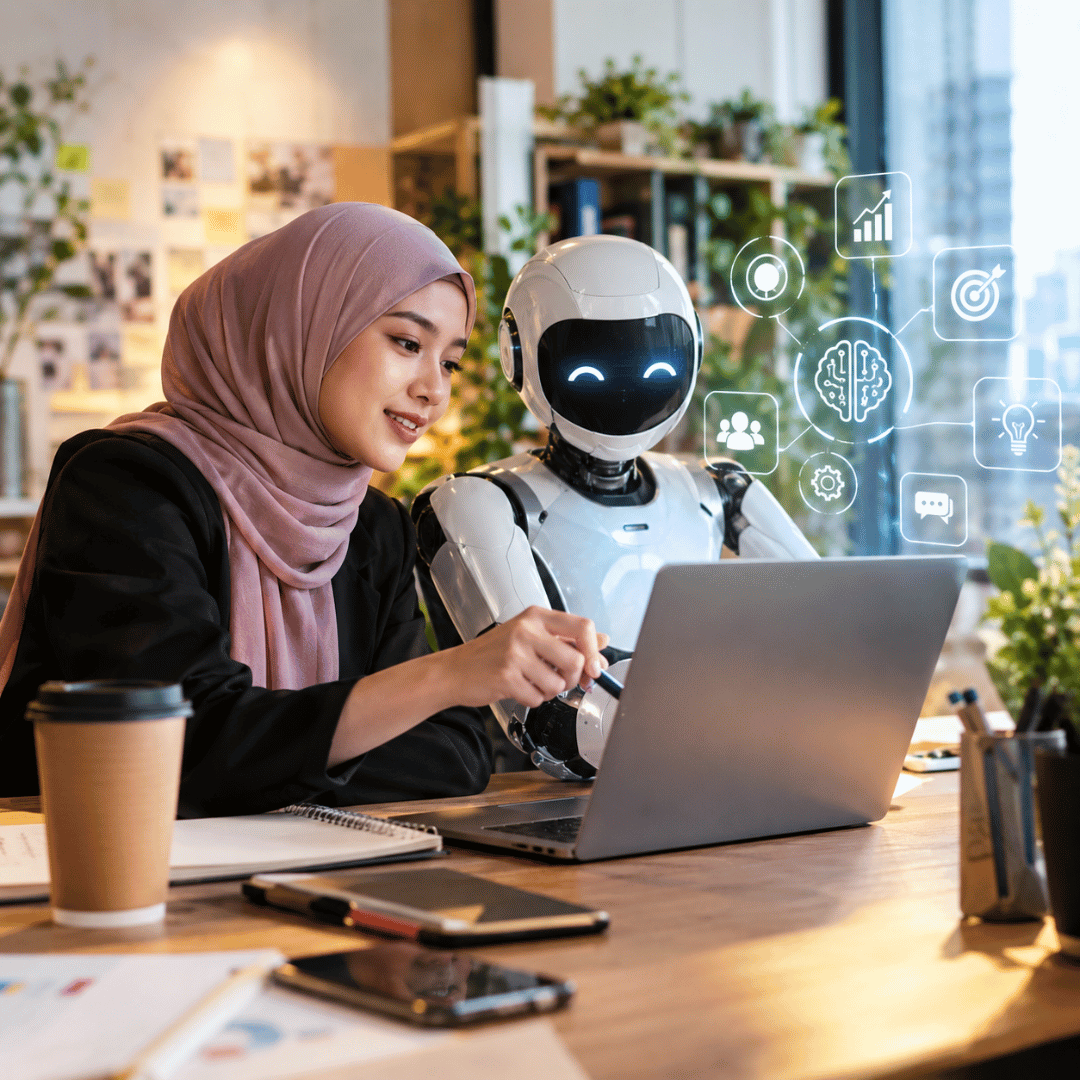
The conversation around human vs AI in business has become increasingly common as companies look for faster, smarter and more efficient ways to operate. Artificial intelligence can analyse information, automate repetitive tasks and generate content within seconds. However, businesses still need people to understand customers, make decisions, build relationships and bring ideas to life.
So, which one actually delivers better business results? The answer is not as simple as choosing humans or AI. In reality, the strongest results often come from combining AI technology with human expertise. AI can handle certain tasks quickly, while people provide the judgement, creativity and emotional understanding that technology cannot fully replace. Therefore, rather than asking whether AI is better than humans, businesses should consider how both can work together.
Humans and AI bring very different strengths to the workplace. AI is particularly useful when businesses need to process large amounts of information, automate repetitive work or identify patterns quickly. For example, AI can assist with data analysis, customer segmentation, content generation and workflow automation.
On the other hand, humans are responsible for understanding context, emotions and the bigger picture. A person can question whether an idea is appropriate for a particular audience, recognize cultural nuances and make decisions based on experience.
In short, AI processes information, while humans give that information meaning and direction. That difference becomes especially important when a business is dealing with customers.
Can AI Make Better Business Decisions Than Humans?
AI can certainly support better decision-making, but it should not automatically be treated as the final decision-maker. For instance, an AI system may identify that a particular type of content receives higher engagement. However, a human marketer still needs to understand why that content worked and whether repeating the same approach would actually benefit the brand.
Moreover, business decisions often involve factors that cannot be measured easily. Customer emotions, brand reputation, cultural expectations and long-term relationships all require human judgement. As a result, AI can provide useful insights, but people still need to evaluate those insights before turning them into business strategies.
Is AI Better for Business Productivity?
When it comes to productivity, AI has a clear advantage in many repetitive tasks.
Businesses can use AI to speed up processes such as:
- Data organization
- Basic research
- Content ideation
- Customer service support
- Report preparation
- Administrative tasks
- Data analysis
- Workflow automation
Consequently, employees can spend less time on repetitive work and more time on tasks that require creativity and strategic thinking. However, productivity should not simply mean doing more work in less time. If AI-generated work is published without proper checking, businesses may end up with inaccurate information, repetitive content or messaging that does not sound authentic.
Therefore, human supervision remains important.
Can AI Replace Human Creativity in Business?
This is where the human side becomes particularly valuable. AI can generate ideas, suggest headlines, create outlines and produce different versions of content. Nevertheless, creativity is not simply about producing something new. It is also about understanding people, experiences, emotions and context.
A strong marketing campaign, for example, needs more than attractive words or visuals. It needs a message that connects with the intended audience. That connection often comes from human experience. A marketer understands the personality of a brand. A creative team understands storytelling. A strategist understands the business objective. Meanwhile, AI can assist these people by helping them work faster and explore more possibilities.
As a result, AI can enhance human creativity without becoming the source of creativity itself.
What Are the Risks of Relying Too Much on AI?
AI can bring major advantages, but excessive dependence can create problems. First, businesses may lose their distinctive voice if they rely heavily on generic AI-generated content. Furthermore, inaccurate or poorly contextualized information can affect customer trust.
There is also the risk of making every interaction feel automated. Customers may appreciate fast responses, but they still want to feel understood. A completely automated experience can sometimes feel impersonal, especially when customers have complicated questions or concerns.
For that reason, businesses should introduce AI carefully rather than simply automating everything possible.
So, Should Businesses Choose Humans or AI?
Instead of choosing between the two, businesses should identify where each one performs best. AI is useful for speed, efficiency, automation and information processing. Humans are valuable for strategy, creativity, communication, judgement and relationship-building. When these strengths are combined, businesses can create a more effective workflow.
For example, AI can help a marketing team analyze trends and generate initial ideas. The human team can then refine those ideas, add the brand’s personality, check the information and decide how the campaign should be executed. This approach allows technology to do what it does best while allowing people to focus on what makes a business genuinely human.
How Can Businesses Find the Right Balance Between Human Expertise and AI?
The right balance depends on the company’s goals, resources and type of work. Rather than introducing AI simply because it is trending, businesses should first identify areas where technology can genuinely improve their operations. From there, teams can determine which tasks should be automated and which require human involvement.
For marketing, this could mean using AI for research and idea generation while keeping strategy, storytelling and campaign direction in human hands. Similarly, customer service teams can use AI to handle simple enquiries while allowing employees to manage more complex customer situations.
Most importantly, every AI-supported process should have a clear purpose. Technology should make the business better not simply make the business more automated.
How Can KNKV Help Businesses Combine Technology With Human Strategy?
Choosing the right technology is only one part of digital growth. Businesses also need a strategy that turns technology, content and marketing activities into meaningful results. This is where KNKV Group can support businesses with a more integrated approach.
Instead of looking at AI, content, social media and digital marketing as separate pieces, KNKV can help businesses develop marketing strategies that connect these elements with their overall business objectives. For example, AI can assist with research, ideation and efficiency, while experienced creative and marketing teams can focus on developing the right message, campaign direction and audience strategy.
Through services such as digital marketing, social media marketing, content development and influencer-related strategies, businesses can build campaigns that use technology without losing the human element. The goal is not to make marketing completely automated. Instead, it is to make the process smarter, more strategic and more effective.
So, who wins in the human vs AI in business debate? Neither one needs to win.
AI offers speed, automation and powerful data-processing capabilities. Humans bring creativity, emotional intelligence, strategic thinking and the ability to understand situations beyond the numbers. Therefore, businesses that treat AI as a replacement for people may overlook one of their most valuable assets: human expertise.
On the other hand, businesses that completely ignore AI may miss opportunities to improve efficiency and productivity. The smarter approach is to use both. Let AI handle what can be automated, and let humans handle what requires understanding, creativity and judgement. When technology and human expertise work together, businesses have a better opportunity to create marketing that is not only efficient, but also meaningful.
Frequently Asked Questions (FAQ)
1.Is AI better than humans in business?
Not necessarily. AI is better at certain tasks such as processing data and automating repetitive work, while humans are better at creativity, judgement, communication and understanding emotions. Therefore, the best results often come from using both.
2.Can AI completely replace human workers?
AI can automate some responsibilities, but it cannot fully replace the human qualities required for many business functions. Strategic thinking, relationship-building, creativity and decision-making still require human involvement.
3.Why is human creativity important in business?
Human creativity helps businesses develop original ideas, understand customer emotions and create meaningful connections with their audiences. These elements are particularly important in branding and marketing.
4.How can businesses use AI without losing the human touch?
Businesses can use AI for tasks such as research, automation, data analysis and initial content ideation while allowing people to manage strategy, creativity, communication and final decisions.
5.What is the biggest benefit of combining humans and AI?
The biggest advantage is that businesses can improve efficiency without sacrificing creativity and strategic thinking. AI can reduce repetitive workloads, allowing human teams to focus on higher-value responsibilities.
6.Can AI improve digital marketing?
Yes. AI can assist with research, audience analysis, content ideas and other marketing processes. However, human marketers still need to develop the strategy, understand the audience and ensure that the final message fits the brand.