Can AI Replace Human Digital Marketers?
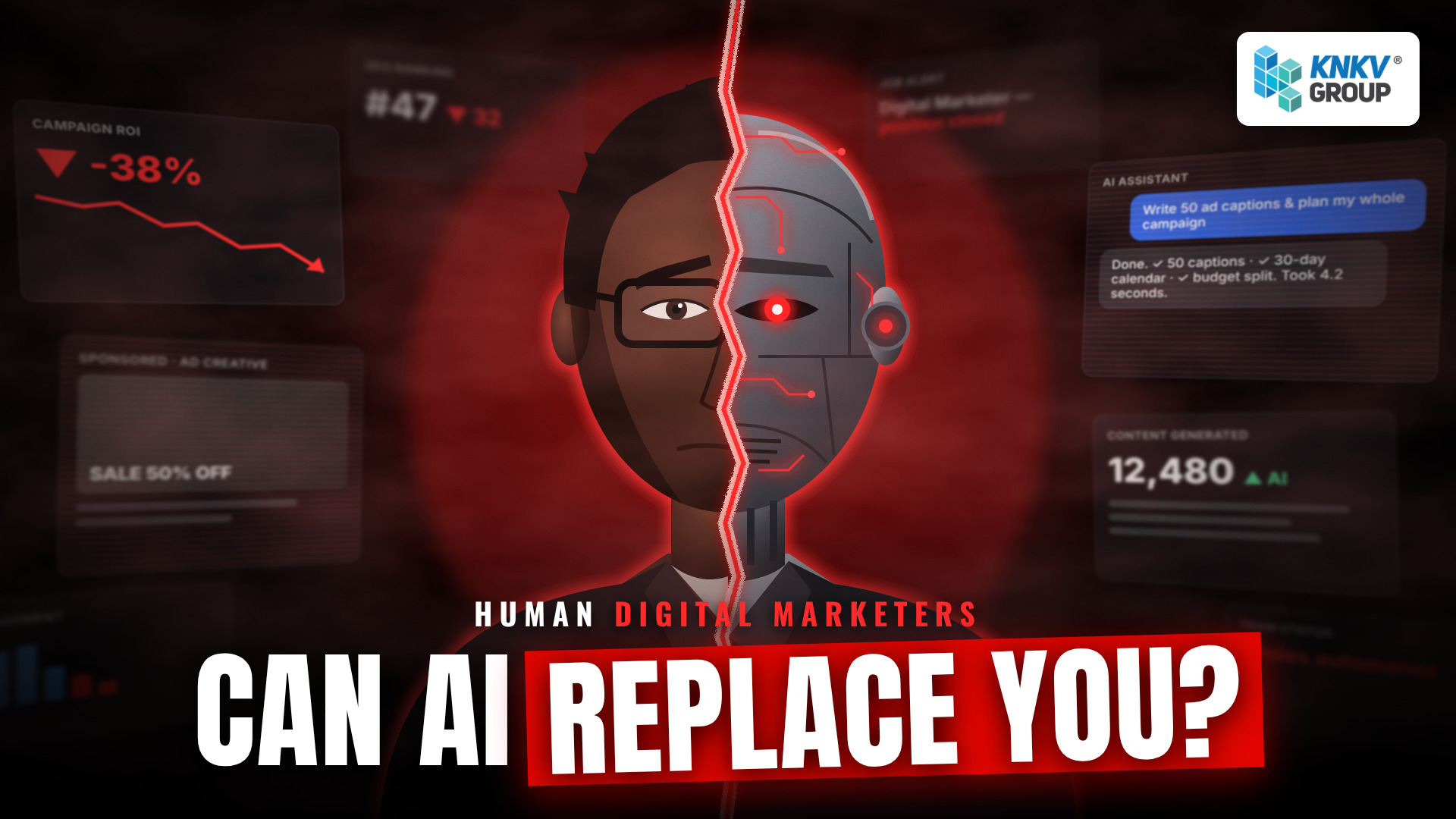
AI is changing digital marketing faster than many businesses expected. From creating ads and writing content to managing campaigns, AI can now handle tasks that once required a whole marketing team. With companies looking to cut costs and work faster, one uncomfortable question is becoming harder to ignore: do businesses still need human digital marketers?
Some companies see AI as a way to reduce manpower and save money. But as more brands rely on AI-generated content, another problem is emerging. Everything is starting to look and sound the same.
The truth is, marketing isn’t just about producing content faster. It’s about understanding people, building trust and knowing what makes customers care.
AI can make marketing easier, but can it truly replace the human touch that makes a brand stand out?
What can AI actually do in digital marketing?
AI can be incredibly useful for marketers, particularly when handling tasks that involve large amounts of information or repetitive work.
For example, AI can help businesses:
- Generate initial content ideas
- Analyze customer and campaign data
- Identify trends and patterns
- Assist with keyword research
- Create content outlines
- Automate certain marketing processes
- Support customer service through chatbots
- Personalize digital experiences
As a result, marketers can spend less time on repetitive tasks and more time thinking about the bigger picture. However, efficiency does not automatically mean effectiveness.
Can AI understand a brand as well as a human?
Not completely. A brand is more than its logo, products or marketing materials. It has a personality, values and a relationship with its audience. Understanding these elements often requires context that cannot simply be reduced to data.
For instance, a campaign may technically have the right keywords, attractive visuals and a strong call-to-action. Yet, if the message feels disconnected from the audience, it may still fail to create an emotional response.
Human marketers bring experience and judgement into this process. They can ask questions such as:
- Does this message feel authentic?
- Will the audience relate to it?
- Does it represent the brand properly?
- Is this the right message for this particular moment?
These decisions require more than automation.
Is AI creative enough to replace human creativity?
AI can generate ideas, but human creativity still plays an important role in deciding which ideas are worth pursuing. A marketer might use AI to generate ten campaign concepts. Nevertheless, a human still needs to evaluate those ideas, understand the target audience and develop the concept into something that feels original.
More importantly, creativity often comes from experiences, observations and cultural understanding. A successful marketing campaign can be funny, emotional, nostalgic, unexpected or deeply personal. Sometimes, the strongest idea comes from understanding something that cannot easily be expressed through a dataset.
Therefore, AI can support creativity, but it should not be treated as a complete replacement for it.
Why is human judgement important in digital marketing?
Digital marketing involves constant decision-making. Marketers need to decide which platforms to use, what type of content to publish, how a brand should respond to changing trends and how campaigns should be adjusted when results are not as expected.
AI can provide recommendations based on available data. However, humans still need to decide whether those recommendations make sense for the business. For example, a particular trend may be generating millions of views. That does not necessarily mean every brand should follow it.
A human marketer can consider the bigger context, including brand positioning, audience expectations and potential risks. In other words, data can guide a decision, but human judgement gives that decision direction.
Can businesses rely only on AI for their marketing?
They can, but doing so comes with limitations. Over-relying on AI may result in content that feels repetitive, generic or disconnected from the brand. If every business uses similar prompts, tools and strategies, the content can eventually start to look and sound the same.
Furthermore, marketing is constantly changing. Consumer behavior, cultural conversations, platform trends and audience expectations can shift quickly. That is why businesses need people who can interpret what is happening and decide how the brand should respond.
Instead of asking, “Should we use AI or humans?”, businesses may benefit more from asking:
“How can we combine AI with human expertise effectively?”
How can AI and human marketers work together?
The strongest approach is often a combination of both. AI can take care of time-consuming tasks, while marketers focus on areas that require creativity, strategy and human understanding. For example, a marketer could use AI to analyze campaign performance and identify potential patterns. From there, the marketer can interpret those findings and develop a new strategy based on the brand’s objectives.
Similarly, AI can help generate a content draft, but a human editor can refine the language, adjust the tone and make sure the message sounds authentic. This approach allows businesses to benefit from technology without losing the human element behind their marketing.
Does using AI mean businesses need fewer marketers?
Not necessarily. Instead, the role of digital marketers may continue to evolve. Rather than spending most of their time completing repetitive tasks, marketers can focus more heavily on strategy, creative direction, audience engagement, campaign planning and brand development.
Consequently, marketers who know how to use AI effectively may become even more valuable because they can combine technological efficiency with human decision-making. The future of digital marketing is therefore less about AI versus humans and more about AI working alongside humans.
How can KNKV help businesses use digital marketing more effectively?
Technology can help businesses move faster, but businesses still need the right strategy to turn that technology into meaningful results. This is where KNKV Group can support businesses with a more integrated digital marketing approach.
Instead of relying on one tool or one marketing channel, businesses can benefit from combining strategy, content, social media, influencer marketing, events and other digital solutions according to their specific goals.
KNKV can help businesses develop marketing campaigns that are not only designed to reach audiences but also communicate the right message, strengthen brand visibility and create stronger audience connections. Most importantly, the human side of marketing remains at the center. Technology can support the process, but strategy, creativity and communication still determine how effectively a brand connects with people.
What is the future of AI in digital marketing?
AI will likely become an even bigger part of digital marketing. More businesses will use AI to analyze information, automate workflows, personalize experiences and support content production. However, that does not necessarily mean human marketers will disappear.
Instead, their responsibilities may become more strategic. Marketers will need to understand how technology works, while also knowing when not to rely on it. They will need to interpret data, challenge automated recommendations and make decisions that align with the brand and its audience.
Ultimately, AI may change how marketing is done, but it does not eliminate the need to understand people.
AI Is a Tool, Not the Whole Marketing Strategy
So, can AI replace human digital marketers? AI can replace certain tasks, but it cannot fully replace the human expertise behind effective marketing. Digital marketing involves more than automation. It is about understanding people, creating meaningful ideas, building trust and making strategic decisions.
AI can make the process faster and more efficient. However, human marketers provide the creativity, judgement and emotional intelligence needed to turn those tools into an effective strategy. For businesses, the smarter approach is not to choose between AI and people. Instead, it is to use AI as a tool while keeping human expertise at the heart of the marketing strategy. After all, technology can generate possibilities but people decide which possibilities are worth turning into something meaningful.