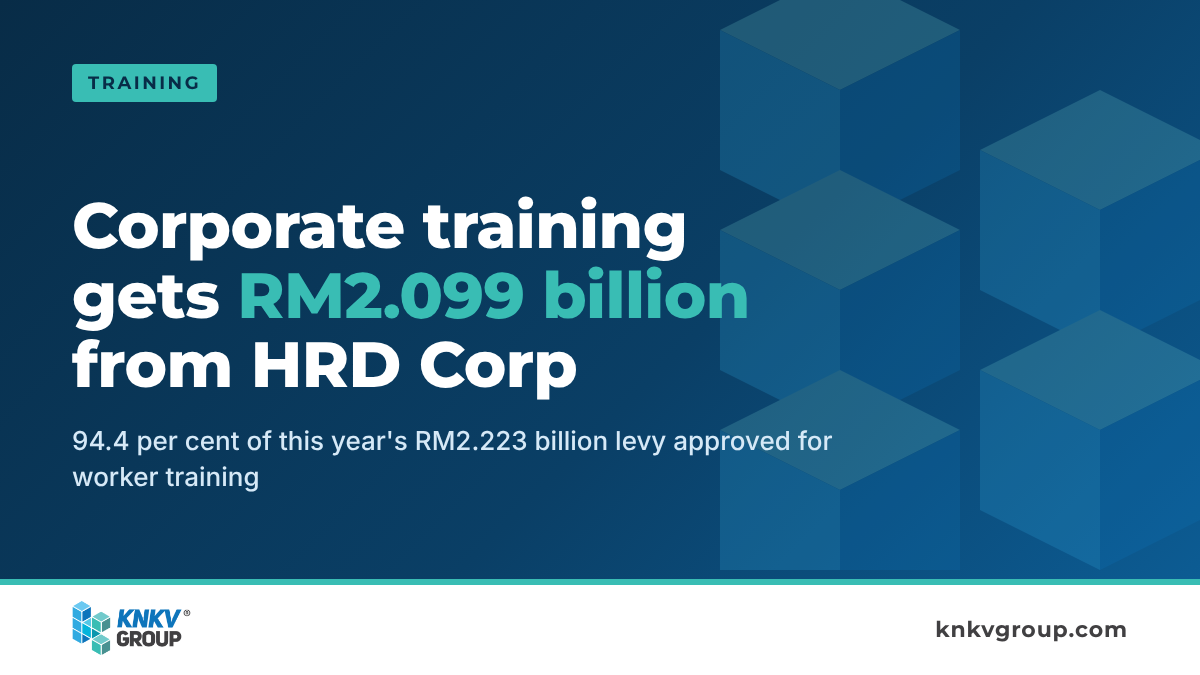
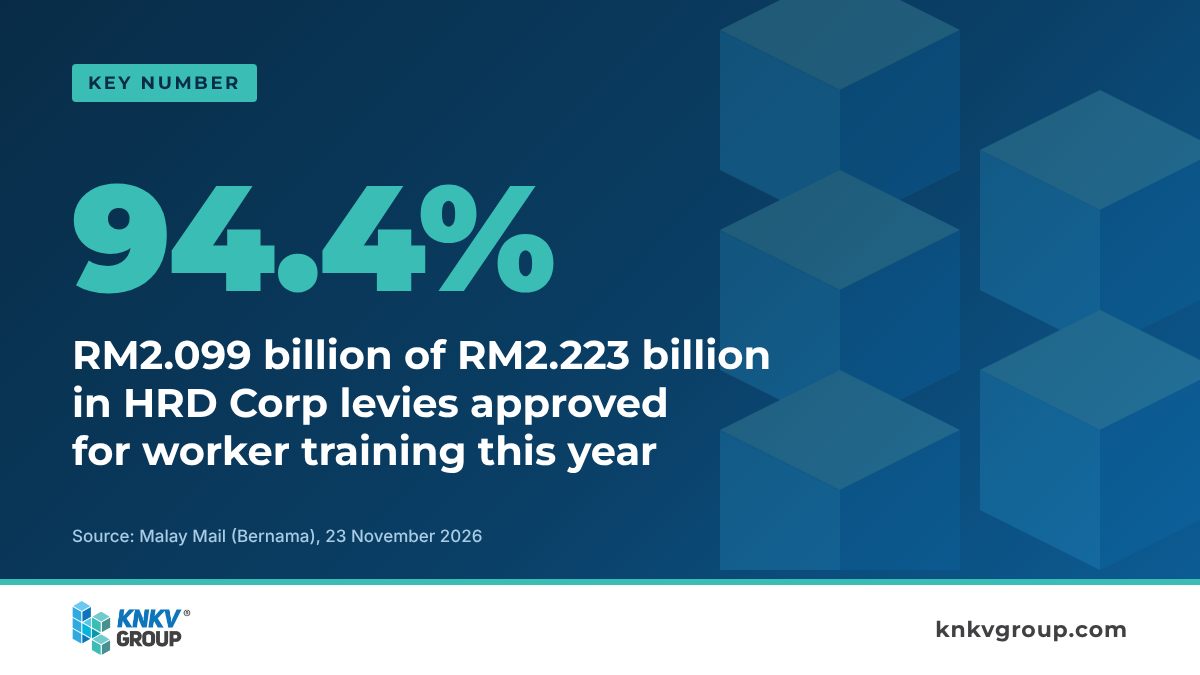
HRD Corp has approved RM2.099 billion in financial assistance for worker training from the RM2.223 billion in levies it collected this year, or 94.4 per cent of the total. For Malaysian employers planning corporate training for 2027, it is a useful moment to review how their own levy is being used.
The numbers were shared by Deputy Human Resources Minister Datuk Khairul Firdaus Akbar Khan in the Dewan Rakyat on 23 November 2026, as he wound up the committee stage debate on the Supply Bill 2027 for the Human Resources Ministry. If your company pays the levy, this is the right moment to check how much of your own balance went into training this year.
What HRD Corp announced
According to Bernama, as reported by Malay Mail, the RM2.099 billion was approved for training programmes for local workers. The Star reported that the money supports upskilling and reskilling programmes.
The deputy minister also said the effectiveness of the levy is judged by more than how much is collected and spent. The impact on workers’ competencies and productivity matters too, according to the Malay Mail report.
How the HRD Corp levy works
Under the Pembangunan Sumber Manusia Berhad Act 2001 (Act 612), employers with 10 or more local employees pay a levy of one per cent. That pooled money can then be claimed back to fund approved training for staff.
In practice, every employer that pays the levy already has a training budget sitting with HRD Corp. The practical question is whether it is used with a plan.
Where the training grants are focused
The ministry said training grants are directed at nine priority areas. Those named in the reports include Industry 4.0, future technologies, fintech, blockchain and green technology.
The Star also reported that HRD Corp is set to use RM3 billion in levy funds to provide three million training opportunities, and that the Skills Development Fund Corporation is to offer RM500 million in financing for skills development. These sit alongside a government allocation of RM8 billion for TVET across ministries.
Corporate training and the 2027 wage picture
Training budgets do not sit in isolation. The Star reported that the RM2,000 minimum wage is scheduled to take effect in June 2027. MSMEs with annual sales below RM50 million are exempted from the revised rate, but must still pay at least RM1,700 a month.
For employers, this puts wages and training on the same 2027 planning table, since levy funds for skills are money already set aside.
“MSMEs with annual sales below RM50mil are exempted from implementing the RM2,000 minimum wage,” Datuk Khairul Firdaus Akbar Khan said in the Dewan Rakyat, as reported by The Star.
What this means for you
- Check your levy balance now. Log in to the HRD Corp portal and see what is left before year end, then plan the first quarter of 2027 instead of rushing claims.
- Match courses to the priority areas. Digital, AI and technology skills line up with the areas the ministry named. A HRDF claimable digital marketing course is one practical way to build digital skills in a marketing or sales team.
- Tie training to a productivity target. With the RM2,000 minimum wage scheduled for June 2027, pick one measurable outcome per programme, such as leads handled per salesperson or campaigns launched per month.
- Do not forget leadership. Managers decide whether new skills are used on the job. A sales and leadership programme helps supervisors turn training into results.
- Build a yearly calendar. Spread sessions across the year so operations are not disrupted. KNKV GROUP runs digital marketing training that can be planned around your levy balance.
Sources
Follow KNKV GROUP on Facebook, Instagram, LinkedIn, TikTok and YouTube.