AI in Marketing: How Businesses Can Use Artificial Intelligence to Increase Sales
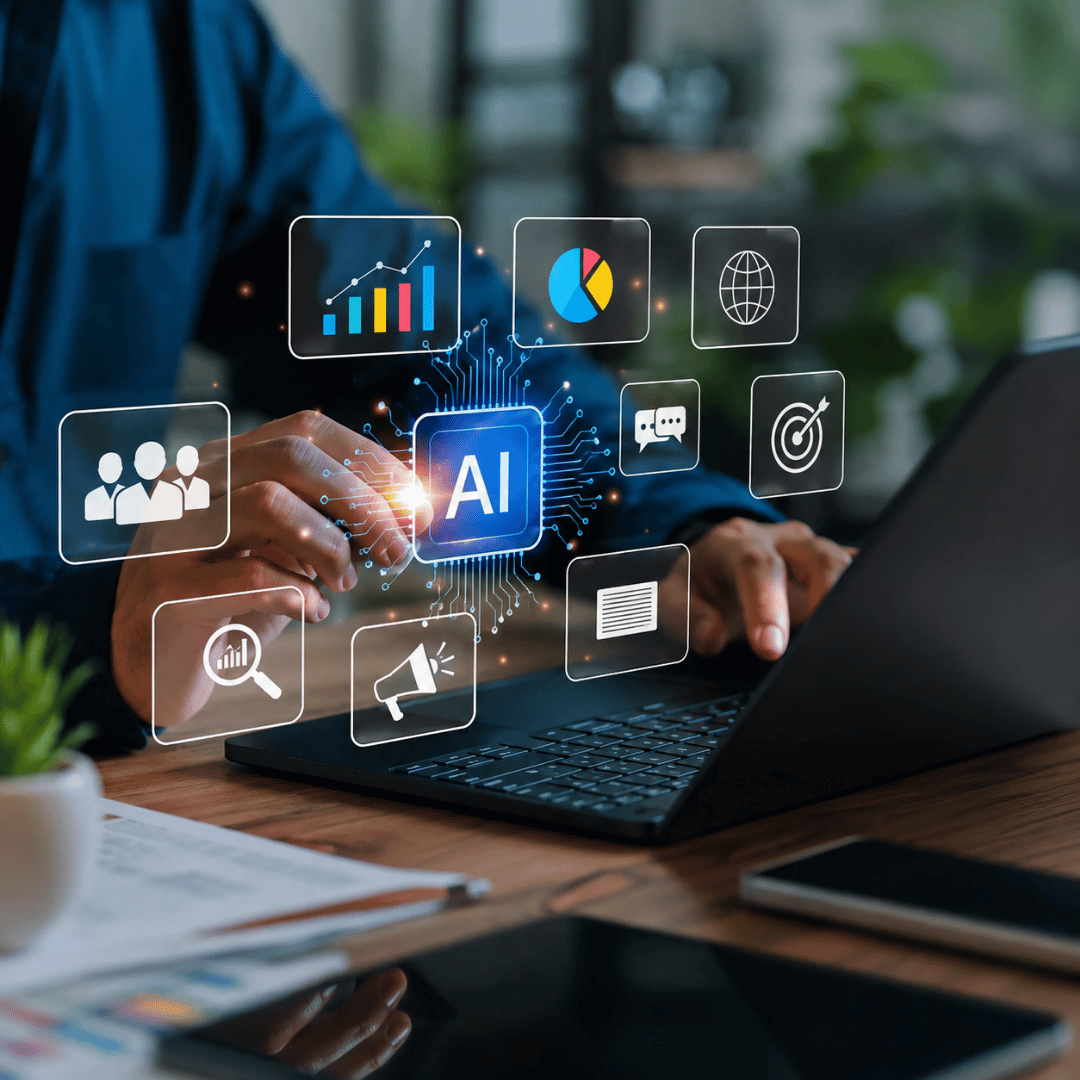
Artificial intelligence is no longer something reserved for large technology companies. Today, businesses of all sizes are using AI to understand customers, create content, improve advertising and make faster marketing decisions.
In fact, AI in marketing is changing the way businesses attract and convert customers. Instead of relying entirely on guesswork, marketers can use AI-powered tools to analyze customer behavior, identify opportunities and deliver more relevant messages to the right audience.
However, using AI effectively is about more than simply generating social media posts or asking a chatbot to write an advertisement. The real value comes from knowing where AI fits into a marketing strategy and how it can support business goals. So, how exactly can businesses use artificial intelligence to increase sales?
What Is AI in Marketing?
AI in marketing refers to the use of artificial intelligence technologies to improve different parts of the marketing process. For example, businesses can use AI to analyze customer data, predict consumer behavior, personalize content, automate repetitive tasks, optimize advertisements and improve customer communication.
Rather than replacing marketers completely, AI works as a powerful support system. It can process large amounts of information quickly, allowing marketing teams to spend more time on strategy, creativity and decision-making. More importantly, AI can help businesses understand what customers want before they make a purchase.
Why Is AI Becoming Important for Businesses?
Customer expectations have changed significantly. People now expect businesses to respond quickly, provide relevant information and deliver content that actually matches their interests. At the same time, businesses are competing across multiple platforms, including Google, TikTok, Facebook, Instagram and other digital channels. Keeping up manually can be challenging.
That is where AI becomes useful. It can help businesses process information faster, identify patterns and automate certain marketing activities. As a result, businesses can potentially save time while creating more targeted marketing campaigns. However, AI should not be treated as a magic solution. Without a clear strategy, even the best AI tools can produce content and campaigns that fail to generate meaningful results.
How Can AI in Marketing Help Businesses Increase Sales?
There are several ways businesses can use AI to support sales growth.
1. Can AI Help Businesses Understand Their Customers Better?
Yes. One of the biggest advantages of AI is its ability to analyze customer data.
For example, AI can help businesses identify:
- Customer interests
- Purchasing behavior
- Frequently viewed products
- Customer demographics
- Website behavior
- Engagement patterns
- Content preferences
- Potential buying intentions
Instead of treating every customer the same, businesses can use these insights to create more relevant marketing campaigns. For instance, an online fashion business may discover that one group of customers frequently purchases workwear while another group is more interested in casual clothing.
With this information, the business can create different campaigns for each audience. Consequently, marketing messages become more relevant, which can improve engagement and potentially increase conversions.
2. Can AI Personalize Marketing Campaigns?
Absolutely. Personalization is becoming increasingly important because customers do not want to feel like they are receiving generic advertisements.
AI can help businesses personalize marketing messages based on customer behavior and preferences. For example, an e-commerce business could recommend products based on what a customer previously viewed or purchased. Similarly, an email campaign could show different product recommendations to different customer segments.
Instead of saying:
“Here are our latest products.”
a business can deliver a more relevant message based on what a particular customer is actually interested in. This creates a more personalized customer experience and can encourage customers to take the next step.
3.Can AI Help Businesses Create Marketing Content Faster?
Yes, and this is one of the most common uses of AI today.
AI tools can assist marketers with brainstorming and developing:
- Social media captions
- Blog ideas
- Advertising copy
- Email campaigns
- Product descriptions
- Video scripts
- Headlines
- Content calendars
- SEO content ideas
However, there is an important distinction between using AI to create content and letting AI completely control the content. Good marketing still needs human creativity, brand understanding and emotional connection. Therefore, businesses should use AI as a starting point rather than simply publishing everything it generates. A strong workflow could look like this:
AI generates ideas → marketer develops the concept → creative team refines the content → brand publishes and measures results.
This approach allows businesses to work faster without sacrificing their brand personality.
4.How Can AI Improve Digital Advertising?
AI can also support businesses with online advertising. Digital advertising generates huge amounts of data. Businesses need to understand which audiences are responding, which advertisements are performing and where their budget is being spent. AI can help analyze this information and identify patterns.
For example, businesses may use AI-assisted insights to understand:
- Which audience segments are engaging most
- Which advertisements generate better results
- Which content attracts attention
- Which campaigns produce conversions
- Which customers are more likely to purchase
As a result, businesses can make more informed advertising decisions instead of relying purely on assumptions. Nevertheless, advertising still requires human oversight. AI can identify patterns, but marketers need to understand the business objective behind those numbers.
5.Can AI Improve Customer Service?
Yes. AI-powered chatbots and virtual assistants can help businesses respond to common customer questions quickly.
For example, customers may ask about:
- Product prices
- Operating hours
- Delivery information
- Product availability
- Booking procedures
- Payment methods
- Frequently asked questions
Instead of making customers wait for a response, businesses can automate basic enquiries. Furthermore, faster communication can improve the overall customer experience. However, complicated issues should still be handled by human staff. Customers often need empathy and problem-solving when dealing with complaints or unusual situations. Therefore, the best approach is not AI versus humans, but AI supporting human teams.
Can AI Help Businesses With Lead Generation?
Yes. AI can support lead generation by analyzing website visitors, customer interactions and campaign data. For example, businesses can use AI-powered systems to identify potential customers based on their behavior.
Someone who repeatedly visits a product page, downloads information and interacts with advertisements may demonstrate stronger buying intent than someone who simply views a social media post. With better data, businesses can prioritize promising leads and develop more relevant follow-up strategies. Consequently, sales teams can spend less time chasing completely cold prospects and more time engaging people who have already shown interest.
Can AI Help With SEO and Content Marketing?
It can. AI can help marketers identify potential topics, search intent, content gaps and keyword opportunities. For example, businesses can use AI to brainstorm topics around their main products and services, identify questions customers frequently ask and organize content ideas into a structured strategy.
However, SEO success is not simply about inserting keywords into an article. Businesses still need useful information, strong search intent alignment, good website experience and content that genuinely helps readers. Therefore, AI should support the SEO process rather than replace strategic thinking.
How Can AI Help Businesses Save Marketing Time?
Marketing teams often spend hours on repetitive tasks. AI can help reduce some of this workload.
For example, marketers can use AI to assist with:
- Content brainstorming
- Data organization
- Report summaries
- Audience research
- Content repurposing
- Customer segmentation
- Campaign analysis
- Social media planning
This gives marketing teams more time to focus on activities that require human judgement and creativity. Instead of spending hours doing repetitive work, teams can use that time to develop better campaigns and stronger customer experiences.
Does Using AI Automatically Increase Sales?
No. This is one of the most important things businesses need to understand. Simply using AI does not guarantee more sales. A business could use dozens of AI tools and still struggle if its marketing strategy, offer, audience targeting or customer journey is weak. AI is a tool. The results depend on how strategically the tool is used.
For example, AI may help a business identify a high-performing audience. But if the product does not solve a genuine customer problem, advertising it more efficiently will not necessarily create sustainable sales. That is why AI should be connected to a clear business and marketing strategy.
What Are the Risks of Using AI in Marketing?
Although AI offers significant opportunities, businesses also need to use it responsibly. One common problem is producing content that feels generic.
When businesses rely too heavily on AI-generated content, their communication can start sounding similar to everyone else. There are also concerns surrounding inaccurate information, data privacy, brand consistency and over-automation.
For this reason, human review remains essential. Before publishing AI-assisted content or launching an AI-supported campaign, businesses should check whether the information is accurate, relevant and aligned with their brand.
How Can Businesses Start Using AI in Marketing?
Businesses do not need to transform their entire marketing department overnight. Instead, start with one area where AI can provide the most value. For example, a business could begin by using AI for:
Step 1: Customer research
Understand customer behavior, interests and common questions.
Step 2: Content planning
Use AI to generate content ideas based on customer needs and search intent.
Step 3: Content creation
Use AI to support copywriting, scripts and creative brainstorming.
Step 4: Advertising analysis
Analyze campaign performance and identify opportunities for optimization.
Step 5: Customer communication
Automate simple enquiries while keeping human support for more complicated issues.
Step 6: Performance measurement
Track results and determine which strategies are actually contributing to business growth.
By taking a gradual approach, businesses can experiment with AI without making unnecessary changes to their entire operation.
How Can KNKV Help Businesses Use AI in Marketing?
Having access to AI tools is one thing. Knowing how to turn those tools into a marketing strategy is another. This is where a strategic digital marketing partner can make a difference. KNKV can help businesses develop and execute digital marketing strategies that combine technology, creativity and data-driven decision-making.
Depending on the business objectives, this can include support across areas such as SEO, social media marketing, digital advertising, content marketing, KOL and influencer marketing, campaign planning and digital content creation.
Rather than using AI simply because it is trending, businesses can focus on where it can genuinely improve their marketing process. For example, AI can support content ideation and research, while KNKV’s marketing expertise can help shape the content around the brand’s audience, positioning and campaign objectives.
Likewise, AI can assist with analyzing campaign information, while marketing specialists can turn those insights into practical improvements. The goal is simple: use technology to work smarter while keeping strategy and creativity at the center of marketing.
Is AI the Future of Marketing?
AI is already changing marketing, and its role is likely to become even more significant. Businesses that learn how to use AI effectively can potentially improve efficiency, understand customers better and make faster marketing decisions.
However, the businesses that benefit most will not necessarily be the ones using the most AI tools. Instead, they will be the businesses that understand when to use AI, how to use it and where human creativity still matters most.
Ultimately, successful marketing is still about people. AI can analyze data, generate ideas and automate processes. But businesses still need strong products, meaningful messages and genuine connections with their customers.
Frequently Asked Questions About AI in Marketing
1. What is AI in marketing?
AI in marketing refers to using artificial intelligence technologies to support activities such as customer analysis, content creation, personalization, advertising, automation and campaign optimization.
2. How does AI help increase sales?
AI can help businesses understand customers, personalize marketing, identify potential leads, optimize advertising and improve customer experiences. These improvements can contribute to stronger conversions and sales.
3. Can small businesses use AI marketing?
Yes. Small businesses can use AI tools for content planning, customer research, social media, advertising analysis and customer communication without needing a large marketing department.
4. Will AI replace marketing professionals?
AI is unlikely to replace the need for skilled marketers entirely. Instead, it can automate repetitive tasks and provide useful insights, allowing marketers to focus more on strategy, creativity and decision-making.
5. Is AI-generated content good for SEO?
AI can assist with SEO content creation, but businesses should focus on producing useful, accurate and original content that satisfies search intent. Human editing and strategic optimization remain important.
6. Should every business use AI?
Not necessarily. Businesses should first identify specific marketing challenges and determine whether AI can solve them effectively. The goal should be better results, not simply using AI because it is popular.
7. How can KNKV help with AI-powered marketing?
KNKV can help businesses combine AI-assisted processes with digital marketing strategy, including SEO, content marketing, social media, advertising, influencer marketing and campaign development.
AI is changing the marketing landscape, but technology alone does not create business growth. The real opportunity comes from combining AI, data, creativity and human strategy. When used properly, AI can help businesses understand their customers, produce content more efficiently, improve advertising decisions and create more personalized experiences.
However, businesses should avoid chasing every new AI tool. Instead, focus on the tools and strategies that solve real marketing problems and contribute to measurable business objectives. With the right approach, AI becomes more than a technology trend. It becomes a practical marketing advantage.
And for businesses looking to bring AI into their digital marketing strategy without losing the human side of their brand, KNKV can help turn ideas, data and technology into a more focused marketing strategy designed for real business growth.