How Email Marketing for Ecommerce Can Bring Customers Back to Your Online Store
Getting someone to visit your online store is only half the battle. The bigger challenge is getting them to come back. A customer might browse your products, add something to their cart, make a purchase and then disappear for weeks or even months. That does not necessarily mean they are no longer interested. Sometimes, they simply need a reminder.
This is where email marketing for ecommerce can make a real difference. Unlike advertising, which often focuses on reaching new audiences, email marketing gives businesses a direct way to reconnect with people who have already shown interest in their products. With the right message at the right time, a simple email can remind customers about your brand, encourage another purchase and gradually turn occasional buyers into loyal customers.
But how does it actually work?
What Is Email Marketing for Ecommerce?
Email marketing for ecommerce refers to using email campaigns to communicate with customers and potential customers throughout their buying journey.
For example, an online store might send emails about:
- New product launches
- Special promotions
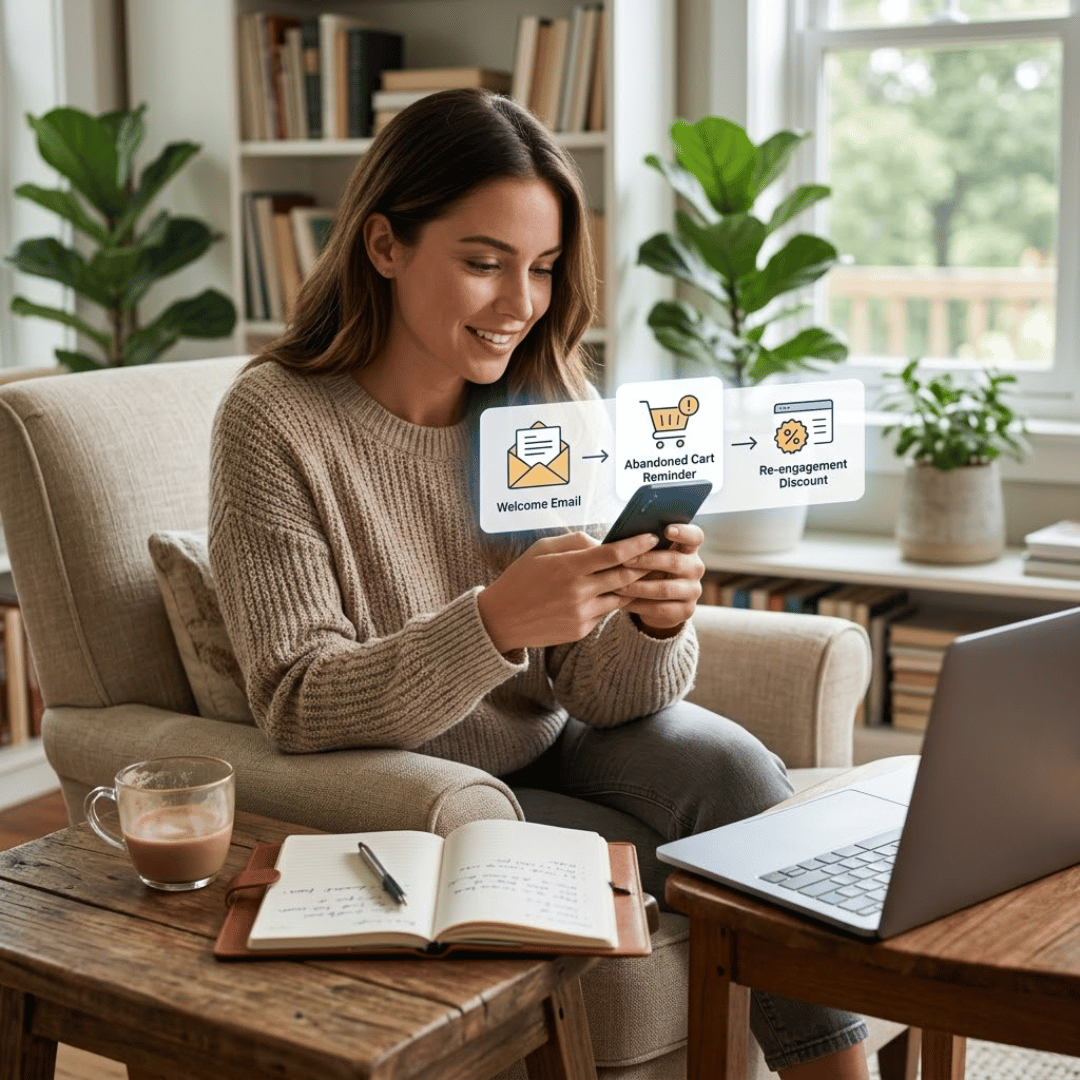
- Abandoned shopping carts
- Personalized product recommendations
- Seasonal campaigns
- Post-purchase follow-ups
- Customer-exclusive offers
- Product restocks
- Loyalty rewards
- Re-engagement campaigns
Instead of waiting for customers to remember your brand on their own, email allows your business to stay connected with them. More importantly, these emails can be personalized based on customer behavior. Someone who recently bought skincare products, for instance, does not necessarily need the same message as someone who has only browsed your clothing collection. That makes email more than just a promotional channel. When planned properly, it becomes part of the customer experience.
Why Do Online Stores Need to Bring Customers Back?
So, why focus so much on existing customers? Because getting a customer to purchase once does not automatically mean they will purchase again.customer may have had a good experience with your store but simply forget about it. With countless brands competing for attention online, staying memorable is becoming increasingly difficult., an existing customer already knows your brand. They may have visited your website, interacted with your social media, signed up for your newsletter or purchased from you before.
Therefore, reconnecting with them can be more meaningful than constantly starting from zero.
For example, imagine a customer purchased a bottle of skincare serum three months ago. Instead of leaving the relationship there, your store could send a helpful reminder about replenishing the product, introduce a complementary item or offer a personalized recommendation.
That small interaction can create another sales opportunity without requiring the customer to discover your brand all over again.
Can Email Marketing Actually Increase Repeat Purchases?
Yes, when it is used strategically.
One of the biggest advantages of email marketing for ecommerce is its ability to support repeat purchases.
After a customer buys something, your communication does not have to stop at the order confirmation.
Instead, you can create a sequence of emails that continues the relationship.
For example:
Purchase → Thank-you email → Product tips → Related recommendation → Special offer → Reorder reminder
This approach feels much more natural than sending random promotional emails every few days.
Additionally, customers can receive recommendations based on what they have previously purchased or viewed. As a result, your emails become more relevant rather than feeling like generic advertisements.
What Types of Ecommerce Emails Can Bring Customers Back?
There is no single email that works for every customer. Different situations call for different messages.
1. Abandoned Cart Emails
Have you ever added something to your cart and then completely forgotten about it?
our customers do the same. An abandoned cart email reminds shoppers that they left something behind. Depending on the campaign, the email could simply highlight the product again or include an incentive such as free shipping or a limited-time discount.
However, the message does not always need to be aggressive. A simple reminder can sometimes be enough to bring the customer back and complete the purchase.
2. Post-Purchase Emails
The customer journey should not end after payment. After a purchase, businesses can send emails thanking customers, explaining how to use the product or providing useful tips. For example, a beauty brand could send skincare tips after someone purchases a facial cleanser.
This keeps the brand relevant while also giving customers a reason to engage with the email beyond a sales message. Consequently, post-purchase emails can help build trust while creating opportunities for future purchases.
3. Product Recommendation Emails
Personalization can make ecommerce emails much more useful. Instead of showing customers your entire catalogue, recommend products that are relevant to their interests.
For instance, if someone previously purchased running shoes, your store could introduce running socks, sportswear or other accessories. The recommendation feels more natural because it is connected to something the customer already owns or likes.
4. Restock Emails
A customer may want to buy your product again, but they may not know when it is available. That is where restock emails can help. When a popular product becomes available again, notifying interested customers gives them a reason to return immediately. Furthermore, restock campaigns can create urgency without relying entirely on discounts.
5. Promotional Emails
Discounts, sales and special offers remain useful, especially when they are relevant. However, constantly sending “BUY NOW” emails can quickly become tiring. Instead, businesses can segment their audiences and send promotions based on customer behavi0r.
For example, loyal customers could receive an exclusive offer, while inactive customers could receive a re-engagement incentive. As a result, promotions become more targeted rather than simply being sent to everyone.
How Can Email Marketing Recover Inactive Customers?
Not every customer will purchase regularly. Some may buy once and disappear. Others may stop opening your emails altogether. Does that mean they are permanently lost? Not necessarily. A re-engagement campaign can remind inactive customers why they interacted with your brand in the first place.
For example, an email could say:
“Still interested? Here’s what’s new.”
From there, you can introduce new products, popular items, useful content or a special offer. The key is to give customers a reason to care again.
At the same time, businesses should recognize when a customer is genuinely inactive. Continuously emailing people who never engage can hurt campaign performance and make your database less valuable.
Therefore, effective email marketing is not simply about sending more emails. It is about sending better and more relevant emails.
Should Every Customer Receive the Same Email?
No. In fact, sending exactly the same message to everyone can make your campaigns less effective. Customers have different interests, purchase histories and levels of engagement.
For example, you could segment customers into groups such as:
- First-time customers
- Repeat customers
- High-value customers
- Customers who have not purchased recently
- Customers who abandoned their carts
- Customers interested in specific product categories
- Customers who frequently engage with emails
Then, each group can receive content that is more relevant to their situation. This approach can make your communication feel more personal while reducing the chances of customers ignoring your emails.
How Often Should an Online Store Send Marketing Emails?
There is no universal number. Sending too few emails may cause customers to forget your brand. On the other hand, sending too many can lead to unsubscribes and frustration.
Instead, focus on consistency and relevance.
Your email calendar could include a mixture of:
- Educational content
- Product updates
- Helpful tips
- New arrivals
- Promotional campaigns
- Seasonal offers
- Customer appreciation messages
Most importantly, every email should have a reason for being sent. Before pressing “send”, ask yourself: Does this email give the customer something useful or interesting? If the answer is no, the campaign probably needs another look.
Can Email Marketing Work Together With Social Media and Other Digital Marketing?
Absolutely. In fact, email works best when it is part of a wider digital marketing strategy. A customer might first discover your brand through TikTok, then follow your Instagram account, visit your website and eventually subscribe to your email list.
From there, email can help maintain the relationship. Similarly, your social media content can encourage followers to join your mailing list, while your emails can direct customers back to your social platforms.
This creates multiple touchpoints instead of relying on one marketing channel. For ecommerce businesses, combining content marketing, social media, paid advertising, influencer marketing and email marketing can create a more connected customer journey.
How Can KNKV Help With Ecommerce Email Marketing?
Building an email strategy can sound simple until you actually have to plan the campaigns, write the content, segment customers, monitor performance and figure out what should be improved. That is where KNKV can support businesses looking to strengthen their digital marketing efforts. Rather than treating email as an isolated marketing activity, KNKV can help businesses look at how email fits into the wider customer journey.
For an online store, this could involve developing content that supports customer retention, creating campaigns around promotions or product launches, and connecting email communication with broader digital marketing activities.
For example, an ecommerce campaign could combine:
Social Media → Influencer Content → Website Traffic → Email Sign-Up → Email Campaign → Repeat Purchase
This creates a more connected strategy where different marketing channels work towards the same business objective.
KNKV’s experience across digital marketing, influencer marketing, content and ecommerce-related services can also help businesses identify opportunities to reach customers at different stages of the buying journey. The goal is not simply to send more emails. It is to build a marketing system that gives customers more reasons to return.
Is Email Marketing Still Worth Investing In for an Online Store?
Yes, particularly when customer retention is an important part of your growth strategy. Paid advertising can help bring new people to your website. Social media can help increase visibility. Influencer marketing can introduce your products to new audiences. But once someone has purchased from you, email gives your business a direct way to continue the conversation.
That is valuable because sustainable ecommerce growth is not only about acquiring new customers. It is also about creating enough value for existing customers to return. Over time, those repeat purchases can contribute significantly to the overall relationship between a customer and your brand.
What Should an Ecommerce Email Strategy Look Like?
A strong strategy does not have to be complicated. A simple customer journey could look like this:
Step 1: Attract
Use social media, SEO, advertising, influencer marketing and other channels to bring people to your online store.
Step 2: Capture
Encourage visitors to subscribe to your email list through useful content, exclusive offers or customer benefits.
Step 3: Welcome
Introduce new subscribers to your brand and explain what they can expect from your emails.
Step 4: Convert
Use relevant product content, promotions and personalised recommendations to encourage purchases.
Step 5: Retain
Follow up with useful information, product recommendations and loyalty-focused campaigns.
Step 6: Re-engage
Reach out to customers who have become inactive and give them a reason to return. This creates a continuous cycle instead of treating every purchase as the end of the customer journey.
What Is the Biggest Mistake Businesses Make With Email Marketing?
One of the most common mistakes is treating email as a digital version of a sales flyer. Every email becomes a promotion. Every subject line pushes a discount. Every message asks the customer to buy something. Eventually, customers stop paying attention. Instead, think about the relationship you want to build.
Sometimes, the best email may sell a product. Other times, it might answer a question, provide a useful tip, introduce something new or simply remind customers that your brand is still there. When customers consistently find value in your emails, they are more likely to open them when you actually have something important to sell.
Give Customers a Reason to Come Back
Getting customers into your online store is important, but keeping the relationship going can be even more valuable.
With the right email marketing for ecommerce strategy, businesses can reconnect with previous customers, recover abandoned carts, promote relevant products and encourage repeat purchases.
More importantly, email gives brands an opportunity to stay connected without relying entirely on algorithms or constantly paying to reach the same audience again.
However, successful email marketing does not happen by simply sending promotional messages every week. It requires thoughtful content, customer segmentation, timing, personalisation and consistent optimisation.
And when email is combined with other digital marketing channels, the results can become even more meaningful. If your online store is attracting customers but struggling to bring them back, it may be time to look beyond the first purchase.
KNKV can help your business build a more connected digital marketing strategy—from attracting new audiences to nurturing existing customers and creating more opportunities for long-term growth.