
A Complete Guide to Professional Short Film Making
A great short film can tell a powerful story in just a few minutes. However, creating one that looks polished, feels authentic, and keeps viewers engaged takes much more than simply pointing a camera and pressing record.
Short film production involves several important stages, from developing the initial idea and writing the script to casting, filming, editing, sound design, color grading, and final delivery. Each stage contributes to the finished film, and when they work together properly, even a short production can leave a lasting impression.
For businesses, short films can also become more than entertainment. They can communicate a brand story, introduce a product, showcase company culture, create emotional connections, or support a wider marketing campaign.
So, what does professional short film production actually involve? And how can businesses create films that are both creative and commercially effective?
Let’s break it down.
What Is Short Film Production?
Short film production is the process of planning, creating, filming, and completing a film that is shorter than a traditional feature-length movie. Although the running time may be brief, the production process can still be quite detailed. In fact, short films often require careful planning because every scene, line of dialogue, camera movement, and sound element needs to serve a purpose.
A professional production usually involves three main stages:
- Pre-production – planning, scripting, casting, location scouting, scheduling, and preparing equipment.
- Production – filming the scenes, recording dialogue, capturing visuals, and managing the production team.
- Post-production – editing, sound design, color grading, visual effects, subtitles, and final delivery.
Together, these stages transform an idea into a finished film.
Why Is Professional Short Film Production Important?
1. It Turns an Idea Into a Clear Story
A strong concept is only the beginning. Without proper storytelling, even an interesting idea can become confusing or difficult to follow. Professional filmmakers look at the story from the audience’s perspective. They consider what viewers should understand, feel, and remember after watching the film. As a result, the final production feels intentional rather than simply being a collection of attractive shots.
2. It Creates a More Professional Brand Image
For businesses, visual quality matters. A poorly lit interview, unclear audio, shaky footage, or awkward editing can affect how audiences perceive the company. On the other hand, a well-produced short film can make a business appear more credible, creative, and professional. Therefore, investing in production quality can support the overall image of a brand.
3. It Creates Emotional Connections
Short films are particularly effective when they focus on human experiences. Rather than simply telling people what a company does, a film can show why it matters. For example, a business could tell the story of its founder, customers, employees, community, or journey. That emotional element can make the content much more memorable.
What Are the Main Stages of Short Film Production?
What Happens During Pre-Production?
Pre-production is where the foundation of the film is created. Before cameras arrive on set, the production team needs to understand exactly what they are trying to achieve. This stage may include:
- Concept development
- Scriptwriting
- Storyboarding
- Casting
- Location scouting
- Production scheduling
- Shot planning
- Equipment preparation
- Costume and props planning
- Budget planning
Although this stage happens behind the scenes, it can make a significant difference to the final result. For example, a detailed shot list allows the crew to work more efficiently during filming. Similarly, location scouting helps identify lighting, sound, space, and logistical issues before production day.
In other words, good preparation reduces unnecessary problems later.
How Important Is the Script?
The script is one of the most important parts of short film production because there is limited time to communicate the story. A strong short film script usually has a clear beginning, middle, and ending. However, it does not necessarily need a complicated plot.
Instead, the focus should be on creating a story that has purpose. For a business, this could mean showing a customer facing a challenge and discovering a solution through the company’s product or service. Alternatively, it could explore the people behind the business and the values that drive them. The key is to make the story feel natural rather than turning the film into a long advertisement.
How Does Storyboarding Help a Short Film?
A storyboard provides a visual plan for the film before filming begins. It helps the director and production team understand how each scene should look, including:
- Camera angles
- Shot composition
- Character positioning
- Camera movement
- Scene transitions
- Important visual details
Consequently, the crew can work from a shared creative vision. Even when a project does not require a highly detailed storyboard, having a clear shot plan can prevent missed shots and unnecessary reshoots.
What Happens During the Production Stage?
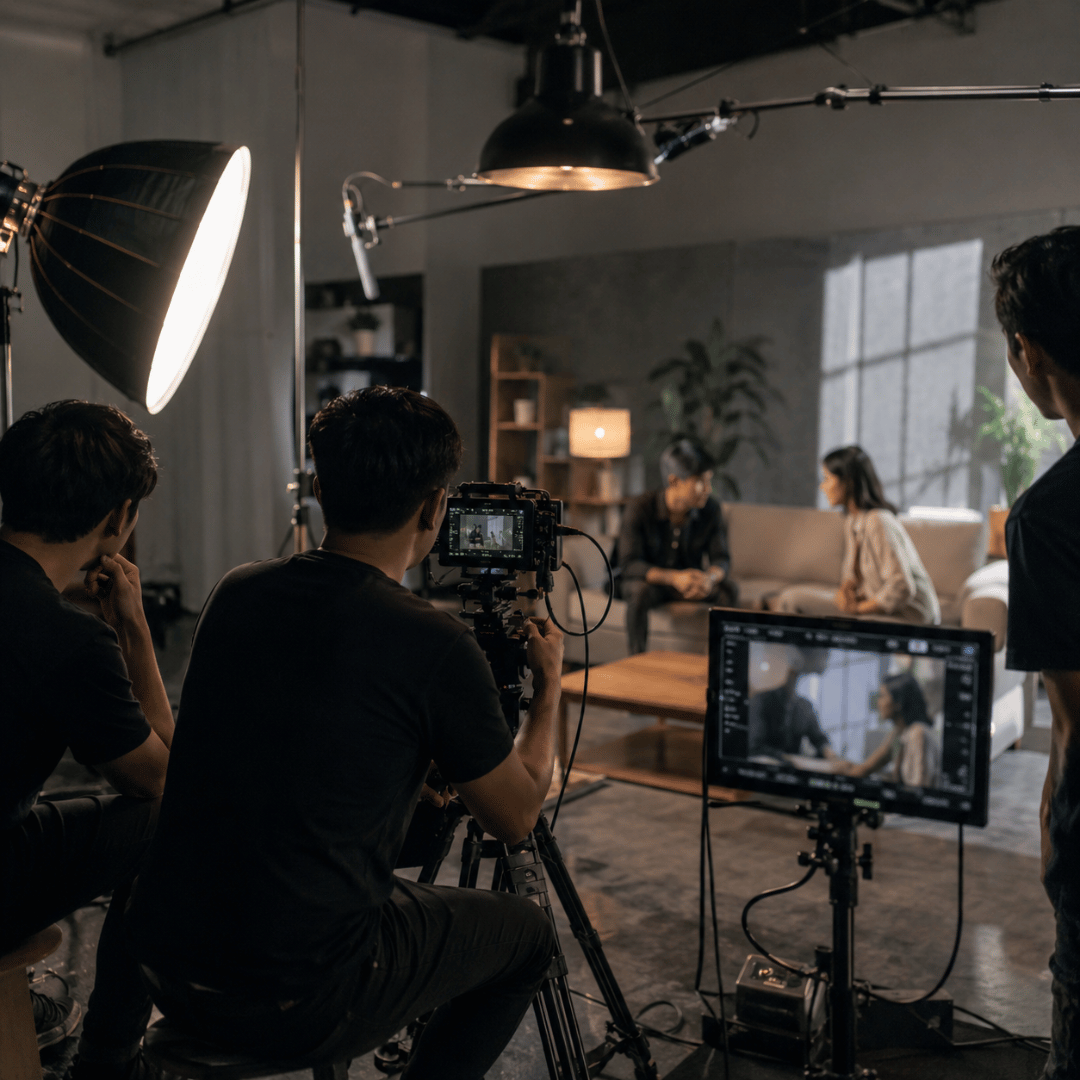
Once pre-production is complete, filming begins. This is where the planning is transformed into actual footage. During production, the director works with the camera crew, lighting team, sound team, actors, and other crew members to capture the required scenes. Several elements need attention at the same time.
Camera and Composition
The camera should not simply record what is happening. It should help tell the story. Different shot sizes and camera angles can create different emotions. A close-up, for instance, can highlight a character’s reaction, while a wide shot can establish the environment.
Lighting
Good lighting helps create the mood and visual identity of a film.
Depending on the story, the production may use natural light, studio lighting, practical lights, or a combination of different techniques.
Sound
Sound is sometimes overlooked, yet it is one of the most important elements of professional filmmaking. Clear dialogue, controlled background noise, appropriate music, and carefully designed sound effects can dramatically improve the viewing experience. Therefore, a beautiful image cannot fully compensate for poor audio.
Why Does Professional Cinematography Matter?
Cinematography is about more than having an expensive camera. It involves making creative decisions about framing, lighting, camera movement, lenses, depth of field, and visual composition. For example, a brand film may use clean and controlled visuals to communicate professionalism. Meanwhile, a dramatic short film may use darker lighting, handheld movement, or tighter framing to create tension. The visual approach should support the story.
Ultimately, professional cinematography helps the audience feel the story rather than simply watch it.
What Happens During Post-Production?
After filming is complete, the production enters post-production. This is where all the individual pieces are brought together.
Post-production may include:
- Video editing
- Audio editing
- Sound effects
- Music
- Color correction
- Color grading
- Motion graphics
- Visual effects
- Subtitles
- Logo animation
- Final mastering
The editor begins by reviewing the footage and selecting the strongest takes. From there, the scenes are arranged to create a coherent story. However, editing is not simply about cutting unwanted footage. Timing, pacing, transitions, pauses, and reactions can all influence how viewers experience the story.
How Does Sound Design Improve a Short Film?
Sound can completely change the atmosphere of a scene. Imagine a dramatic moment with no background sound, music, or ambient noise. The scene may feel flat. Add carefully selected sound elements, however, and the same visuals can become much more immersive.
Professional sound design may include:
- Dialogue cleaning
- Background ambience
- Sound effects
- Foley
- Music
- Audio mixing
As a result, the film feels more complete and emotionally engaging.
Why Are Color Grading and Color Correction Important?
Color correction ensures that footage looks consistent from one shot to another. Color grading goes a step further by creating a specific visual mood.
For example, warmer tones can create a welcoming or nostalgic feeling, while cooler tones may create a more serious or dramatic atmosphere. For corporate storytelling, color grading can also help maintain consistency with a brand’s visual identity. Therefore, these final visual adjustments should not be treated as an afterthought.
How Can Businesses Use Short Films?
Short films can be useful for businesses in several ways.
- Brand Storytelling
A short film can introduce the story behind a company and help audiences understand what makes the business different.
- Product Storytelling
Instead of listing product features, a film can demonstrate how the product fits into a real situation.
- Corporate Communications
Businesses can use short films for internal communications, company events, recruitment, or corporate presentations.
- Social Media Marketing
Short-form storytelling can also be adapted for platforms such as Instagram, TikTok, YouTube, and other digital channels. Furthermore, one professionally produced film can often be edited into several shorter pieces of content, giving businesses more value from a single production.
- Campaign Content
A short film can become the central creative asset of a larger marketing campaign, supported by social media clips, advertisements, photographs, behind-the-scenes content, and other promotional materials.
How Can KNKV Help With Short Film Production?
Producing a professional short film requires more than equipment. It requires creative direction, planning, technical expertise, and an understanding of the audience. This is where KNKV can support businesses throughout the production process. Rather than treating video production as simply “shooting a video”, KNKV can help businesses develop content around a clear communication objective.
The process can involve understanding the business, developing the creative direction, planning the production, filming professionally, and handling post-production. More importantly, the goal is to create a film that fits the brand and has a clear reason for existing.
For example, if a company wants to tell its brand story, the production can focus on people, values, and experiences. If the objective is marketing, the storytelling can be structured around audience needs and business objectives.
The result is a short film designed not only to look good, but also to communicate something meaningful.
What Should Businesses Consider Before Producing a Short Film?
Before starting production, businesses should ask several important questions.
1.Who Is the Target Audience?
A film created for potential customers will have a different tone from one created for employees, investors, or business partners.
2.What Is the Main Message?
If viewers remember only one thing after watching the film, what should it be? Having a clear answer keeps the production focused.
3.Where Will the Film Be Used?
Consider whether the film will appear on:
- Social media
- Websites
- YouTube
- Digital advertising
- Corporate presentations
- Events
- Internal communications
This decision can influence the format, duration, aspect ratio, and editing style.
4.What Action Should Viewers Take?
A good business film should have a purpose. Depending on the campaign, the desired action could be visiting a website, contacting the company, learning more about a product, attending an event, or simply remembering the brand.
5.Is a Short Film Worth the Investment for a Business?
It can be, particularly when the film has a clear purpose and is produced strategically. The value of a short film should not be measured only by its running time. A three-minute film can require considerable creative and technical work, while a well-planned production can continue to generate content long after the original filming day.
For instance, a business could create:
- One main short film
- Several social media cuts
- Behind-the-scenes content
- Short promotional clips
- Teaser videos
- Vertical versions
- Website content
Therefore, professional short film production can become part of a broader content strategy rather than a one-time marketing asset.
Frequently Asked Questions About Short Film Production
1. How long does short film production take?
The timeline depends on the complexity of the project. A simple production may require only a few days of preparation and filming, while a more complex project involving multiple locations, actors, visual effects, or detailed sets may take considerably longer.
2.How long should a short film be?
There is no single perfect length. The film should be as long as necessary to tell the story without losing the audience’s attention. For business content, shorter versions may also be created for social media and digital advertising.
3.Does a short film need professional actors?
Not always. Depending on the concept, businesses may use professional actors, employees, customers, presenters, or real people. The right choice depends on the story and the desired tone.
4.Can a short film be used for marketing?
Absolutely. Short films can support brand awareness, storytelling, product marketing, recruitment, corporate communications, social media campaigns, and other marketing objectives.
5.How much does professional short film production cost?
Costs vary depending on factors such as script development, number of filming days, locations, crew size, equipment, talent, post-production, visual effects, and overall creative requirements. The best approach is to establish the project’s objectives and scope before determining the production budget.
6.Can one short film create multiple pieces of content?
Yes. With proper planning, the main film can be repurposed into shorter social media videos, teasers, trailers, advertisements, vertical clips, and behind-the-scenes content.
7.Why should a business work with a professional production team?
A professional team brings together creative planning and technical expertise. As a result, businesses can avoid common production problems while achieving stronger visuals, cleaner sound, better storytelling, and a more consistent final product.
Make Every Minute of Your Story Count
A short film may only last a few minutes, but creating something memorable requires careful thought at every stage. From the first idea and script to cinematography, sound, editing, and color grading, every decision contributes to the final experience. Professional short film production therefore is not simply about making attractive footage. It is about turning an idea into a story that people can understand, feel, and remember.
For businesses, that distinction matters. When a short film is connected to a clear brand message and wider marketing objective, it can become a valuable communication asset rather than just another piece of content. With the right creative direction and production partner, your business can tell its story in a way that feels professional, authentic, and relevant to the people you want to reach.