Multi-Camera Production: The Complete Guide to Professional Multi-Camera Video Production for Businesses
When it comes to producing professional video content, having just one camera is not always enough. Multi-camera production allows businesses to capture the same event, presentation or performance from several angles, creating a more dynamic and polished viewing experience.
Whether you are organizing a corporate conference, livestreaming a product launch, recording an interview or producing a promotional campaign, multiple cameras can make the final video feel more engaging and professional. More importantly, viewers are less likely to lose interest when the visuals change naturally and the content keeps moving.
However, using several cameras is not simply a matter of placing cameras in different locations. It requires careful planning, coordination, technical knowledge and a clear understanding of the story you want the audience to experience. So, what exactly is multi-camera production, and how can businesses use it effectively?
Let’s take a closer look.
What Is Multi-Camera Production?
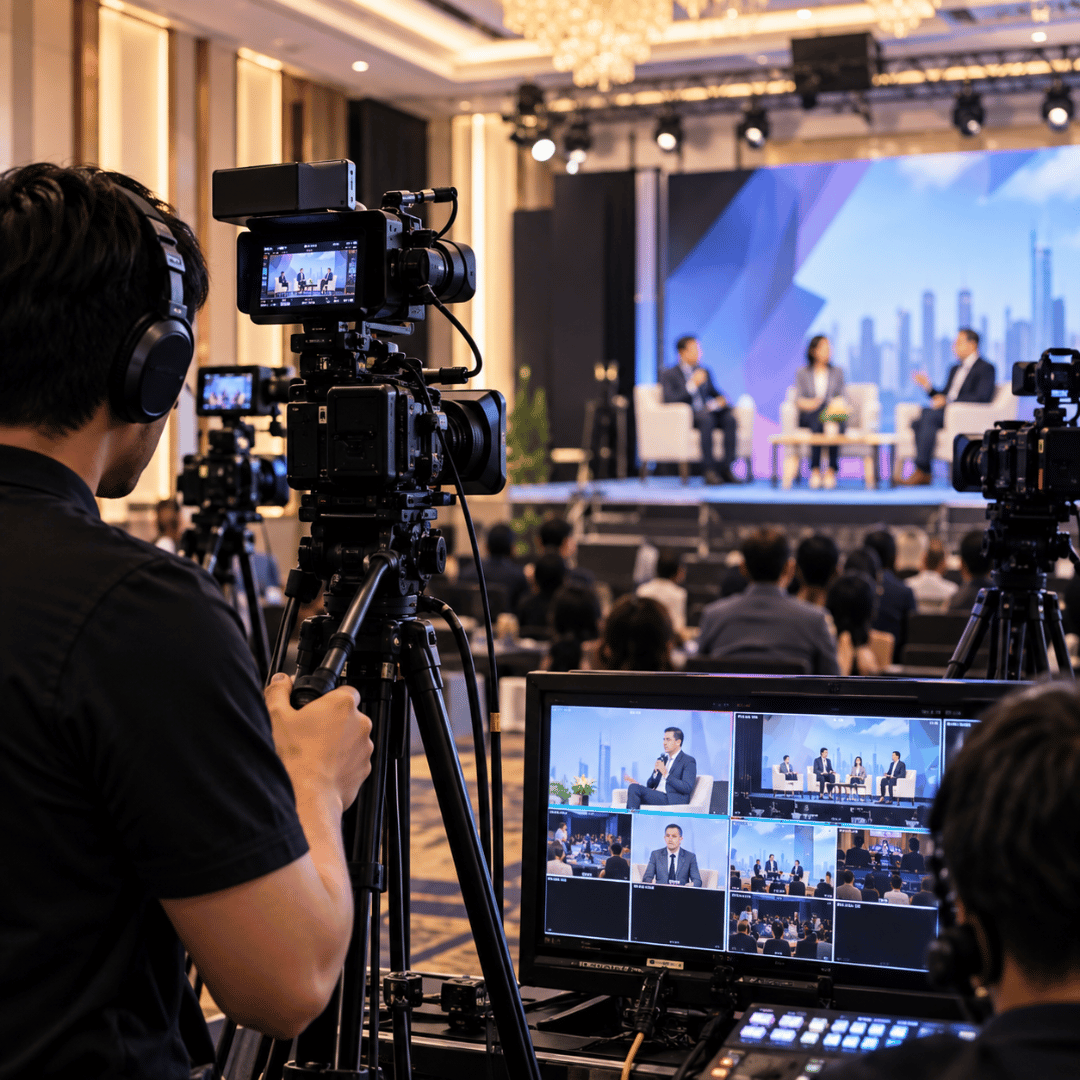
Multi-camera production is a video production method that uses two or more cameras to record the same event or scene simultaneously. Instead of relying on a single fixed angle, the production team can capture different perspectives. For example, one camera may show a wide shot of the stage, another may focus on the speaker, while a third captures audience reactions.
As a result, editors have more visual options when creating the final video.
Multi-camera production is commonly used for:
- Corporate events and conferences
- Product launches
- Seminars and business talks
- Interviews and panel discussions
- Livestreams
- Concerts and performances
- Award ceremonies
- Promotional videos
- Training and educational content
- Social media video campaigns
Because of this flexibility, multi-camera production can be particularly useful for businesses that want their video content to look professional without feeling static.
Why Is Multi-Camera Production Important for Businesses?
A professional-looking video can influence how people perceive a brand. Therefore, businesses need to think beyond simply recording an event.
A well-produced video should hold attention, communicate information clearly and reflect the quality of the business behind it.
1. Creates More Dynamic Visuals
One of the biggest advantages of using multiple cameras is visual variety. For instance, a conference video can move between a wide stage shot, a close-up of the speaker and audience reactions. Consequently, the video feels more natural and engaging than footage recorded from one position.
2. Keeps Audiences Engaged
Viewers are accustomed to fast-moving digital content. Therefore, long periods of footage from the same camera angle can quickly become repetitive. With multiple camera angles, businesses can introduce visual changes at the right moments while keeping the story consistent.
3. Captures Important Moments
Events often involve several things happening at once. While one camera focuses on the main speaker, another can capture the audience, product demonstrations or important reactions. As a result, fewer valuable moments are missed.
4. Makes Events More Suitable for Livestreaming
Multi-camera production is especially useful for livestreams. Instead of showing viewers one static perspective, a production team can switch between different camera feeds in real time. This creates a viewing experience that feels closer to professionally produced television content.
5. Provides More Content for Marketing
Another major benefit is content flexibility.
One event can generate multiple pieces of content, including:
- Full-length event videos
- Short social media clips
- Speaker highlights
- Behind-the-scenes footage
- Promotional reels
- Customer testimonials
- Educational clips
Therefore, a single production can support a wider content marketing strategy.
How Does Multi-Camera Production Work?
Although the final video may look effortless, professional multi-camera production involves several stages.
Step 1: Pre-Production Planning
First, the production team needs to understand the purpose of the video. What is being filmed? Who is the target audience? Will the video be livestreamed or edited later? Which moments are most important? These questions help determine the number and positioning of cameras.
Step 2: Camera Positioning
Next, each camera needs a specific role.
A typical setup might include:
Camera 1 – Wide Shot:
Provides an overall view of the stage, venue or environment.
Camera 2 – Main Shot:
Focuses on the presenter, speaker or primary subject.
Camera 3 – Close-Up or Detail Shot:
Captures facial expressions, products, demonstrations or audience reactions.
Additional cameras can be added depending on the scale and complexity of the production.
Step 3: Lighting and Audio
Good visuals alone are not enough. Lighting needs to be consistent across camera angles, while audio must be clear and properly recorded. Otherwise, even high-quality footage can feel unprofessional. For business events, microphones, audio mixers and backup recording systems may also be necessary.
Step 4: Live Switching or Post-Production
There are two common approaches. For a live production, a video switcher allows the operator to change between camera feeds in real time. For an edited production, footage from all cameras is synchronized and edited afterwards. Both approaches have their advantages. Live switching is useful for livestreams and real-time events, while post-production provides greater creative control.
Step 5: Editing and Content Optimization
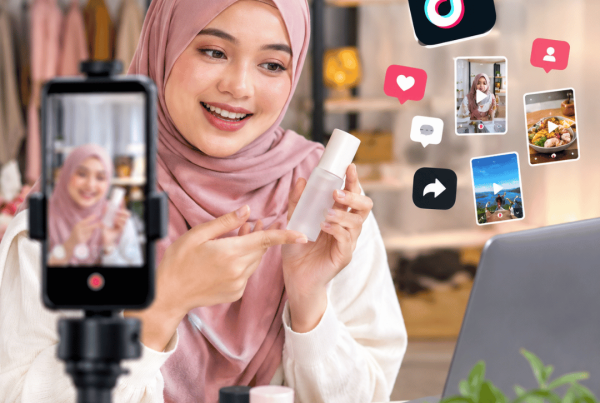
Finally, the footage can be edited into the required formats. For example, a two-hour corporate event could become a full event video, a five-minute highlight video and several short-form clips for TikTok, Instagram or other social platforms. This is where production and marketing can work together to maximize the value of the content. What Equipment Is Needed for Multi-Camera Production?
The equipment depends on the scale of the project. However, a professional setup may include:
- Multiple video cameras
- Tripods or camera stabilization equipment
- Professional lenses
- External microphones
- Audio mixers
- Video switchers
- Lighting equipment
- Monitors
- Recording equipment
- Cables and connectivity systems
- Backup storage
- Streaming equipment for livestreams
Importantly, having expensive equipment does not automatically guarantee a good video. The real difference comes from how the equipment is planned, operated and integrated into the overall production.
What Are the Challenges of Multi-Camera Production?
While multi-camera production offers many advantages, it also requires more coordination than a single-camera setup.
Camera Coordination
Every camera needs to have a clear purpose. Otherwise, multiple cameras may capture similar shots while important angles are missed.
Consistent Image Quality
Cameras should ideally maintain consistent exposure, color and white balance. Otherwise, switching between shots can look distracting.
Audio Management
Audio can become complicated when several microphones and sources are involved. Clear dialogue and properly balanced sound are essential.
Timing
For live productions, camera operators and technical crews need to communicate effectively. A poorly timed camera switch can distract viewers from the content.
Backup Planning
Technical problems can happen unexpectedly. Therefore, professional productions should have backup batteries, storage, cables and recording solutions whenever possible.
How Can Businesses Get Better Results From Multi-Camera Production?
Simply adding more cameras does not necessarily create better content. Instead, businesses should focus on purposeful production. Before filming, identify the moments that matter most. Then, plan camera positions around those moments.
For example, if a business is launching a new product, the production should capture more than the presenter. It should also show the product itself, audience reactions, demonstrations and important details.
Likewise, for a corporate seminar, the production should capture the speaker, presentation slides, audience engagement and memorable moments. In other words, every camera should contribute something to the story.
How Can KNKV Help With Professional Video Production?
For businesses that want to create professional video content without managing every production detail internally, working with an experienced marketing and production partner can make the process much easier.
KNKV can help businesses turn video production into a strategic marketing asset, rather than simply recording an event and leaving the footage unused.
From campaign planning and content strategy to video production and digital marketing, KNKV can help businesses create content that supports their wider marketing objectives.
For example, a multi-camera production can be planned around the content a business actually needs. Instead of producing one long video, the footage can potentially be repurposed into social media clips, promotional content, highlights and other marketing materials.
This approach helps businesses get more value from each production.
Moreover, professional video content can strengthen brand presentation, improve audience engagement and provide businesses with reusable visual assets for future campaigns.
Is Multi-Camera Production Worth It for Small Businesses?
Yes, but the setup should match the purpose. Not every business needs five cameras, a large production crew or a complex broadcast system. For a smaller interview, product demonstration or corporate video, two or three strategically positioned cameras may already provide enough visual variety.
Therefore, businesses should consider the objective, location, audience and distribution platform before deciding on the production scale. The goal is not to use the most cameras possible. The goal is to create the right viewing experience.
What Types of Business Content Benefit Most From Multi-Camera Production?
Multi-camera production can work particularly well for content where movement, interaction or multiple perspectives are important.
These include:
- Corporate conferences
- Business seminars
- Product launches
- Panel discussions
- Award ceremonies
- Company events
- Interviews
- Livestream shopping
- Brand activations
- Promotional campaigns
- Educational programs
Furthermore, businesses can repurpose the footage across multiple platforms, making the production more valuable over time.
Frequently Asked Questions About Multi-Camera Production
1.Is multi-camera production only for large events?
No. Multi-camera production can be scaled according to the project. A small business interview may only require two cameras, while a large conference or livestream may require several cameras and a dedicated production crew.
2. How many cameras are needed for a professional video?
There is no fixed number. Two cameras may be enough for an interview, while a large event could require three, four or more cameras. The right number depends on the venue, content, movement and desired final result.
3.Is multi-camera production suitable for livestreaming?
Absolutely. In fact, multi-camera production is widely useful for livestreams because it allows viewers to experience different angles in real time.
4.Is multi-camera production better than single-camera production?
Not necessarily in every situation. Single-camera production can be perfectly suitable for simple videos. However, multi-camera production provides greater visual flexibility and can create a more dynamic viewing experience.
5.Can multi-camera footage be used for social media?
Yes. This is one of its biggest advantages. Footage from a multi-camera production can be edited into shorter videos for social media, advertisements, highlights and other digital content.
6.Does multi-camera production require professional crew members?
For complex productions, having experienced crew members is highly recommended. Camera operators, audio technicians, lighting teams and production coordinators can work together to ensure the production runs smoothly.
7. How can businesses maximize the value of a multi-camera production?
The key is to plan for content repurposing from the beginning. Instead of thinking only about the final event video, businesses can identify additional content opportunities before filming begins. This allows the production team to capture footage that can later be transformed into multiple marketing assets.
Turn Every Production Into a Marketing Opportunity
Professional multi-camera production is more than simply recording an event from different angles. Done correctly, it creates a richer viewing experience, captures important moments and gives businesses more content to work with. Most importantly, the production should always connect back to a clear marketing objective.
Whether your business is preparing for a corporate event, launching a product, organizing a seminar or creating content for social media, the right production strategy can make your message more impactful.
And that is where a strategic partner like KNKV can add value. By combining creative content, video production and digital marketing thinking, businesses can turn one production into a wider content opportunity that continues working long after the cameras stop rolling.
Ready to make your next business video look more professional and work harder for your brand? Multi-camera production could be the next step.