Google Ads, Google Analytics and Google Tracking: The Complete Guide to Growing Your Business with Data-Driven Marketing
Digital marketing is no longer about simply creating attractive advertisements or publishing content regularly. Today’s successful businesses rely on accurate data, measurable campaigns, and informed decision-making to stay ahead of their competitors.
Whether you’re investing hundreds or thousands of ringgit into digital advertising, one question remains the same:
Is your marketing actually generating results?
Without proper tracking, businesses are often left guessing. You might know how much you’ve spent, but you may not know which campaign generated the most leads, which keyword produced the highest sales, or why visitors abandoned your website before making a purchase.
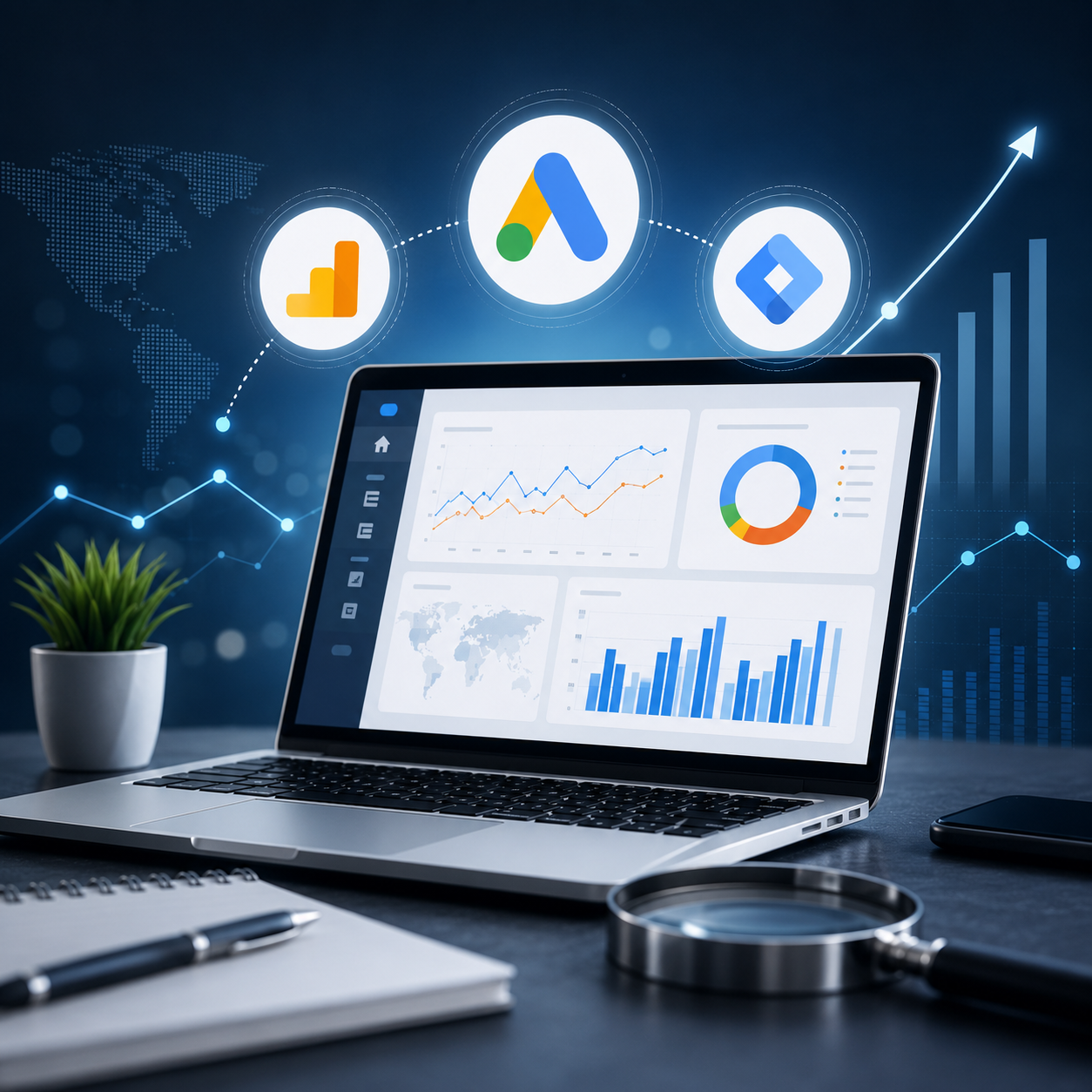
This is where Google Ads, Google Analytics and Google Tracking become powerful tools. Together, they help businesses understand customer behavior, optimize advertising budgets, and improve marketing performance through reliable, real-time insights.
At KNKV Group, we believe successful digital marketing should never rely on assumptions. Every campaign should be backed by meaningful data, strategic analysis, and continuous optimization to maximize returns on investment.
In this guide, you’ll learn how these three Google tools work together, why they matter, and how your business can use them to achieve sustainable growth.
What Is Google Ads?
Google Ads is Google’s online advertising platform that allows businesses to display advertisements across multiple Google-owned platforms, including:
- Google Search
- Google Display Network
- YouTube
- Gmail
- Google Maps
- Partner websites
Unlike traditional advertising, Google Ads targets people who are already searching for products or services similar to yours.
For example, someone searching:
- “digital marketing agency Malaysia”
- “best accounting software”
- “coffee shop near me”
already has purchase intent. Google Ads allows your business to appear in front of these potential customers at the exact moment they’re looking for solutions.
Instead of waiting for customers to discover your brand organically, Google Ads brings your business directly to them.
How Google Ads Works?
Google Ads operates using a bidding system. Businesses select keywords related to their products or services and compete with other advertisers for visibility. However, winning isn’t simply about paying the highest amount.
Google also evaluates:
- Ad relevance
- Landing page quality
- Expected click-through rate
- User experience
- Overall Quality Score
This means businesses with highly relevant advertisements often outperform competitors spending much larger budgets.
When campaigns are properly optimized, Google Ads can generate:
- Qualified leads
- Online sales
- Phone enquiries
- Appointment bookings
- Store visits
- Brand awareness
Different Types of Google Ads Campaigns
Google Ads offers several campaign formats depending on your objectives.
1. Search Ads
These text advertisements appear at the top of Google search results. They’re ideal for businesses looking to capture customers with high buying intent.
2. Display Ads
Display campaigns place banner advertisements across millions of websites within Google’s Display Network.
These campaigns are excellent for:
- Brand awareness
- Retargeting visitors
- Increasing visibility
3. Shopping Ads
E-commerce businesses can display product images, pricing, ratings, and store information directly within Google Search.
Shopping campaigns often produce higher click-through rates because customers immediately see the product before clicking.
4.Video Ads
Video campaigns appear on YouTube before, during, or after videos.
They’re particularly effective for:
- Storytelling
- Product demonstrations
- Brand awareness
- Customer education
5. Performance Max Campaigns
Performance Max uses Google’s artificial intelligence to automatically optimize campaigns across all Google channels.
The system continuously identifies where advertisements perform best and allocates budget accordingly.
What Is Google Analytics?
Running advertisements is only one part of digital marketing. Understanding what visitors do after clicking your ads is equally important.
Google Analytics is Google’s website analytics platform that tracks visitor behavior after they arrive on your website.
Instead of guessing how customers interact with your business online, Google Analytics provides detailed insights into their journey.
It answers questions like: Where do visitors come from?
- Which pages are most popular?
- How long do visitors stay?
- Which marketing channel generates the highest conversions?
- Why do visitors leave without buying?
These insights enable businesses to improve both their website and marketing strategy.
1.Key Metrics in Google Analytics
Website Traffic
Understand how many users visit your website daily, weekly, or monthly.
You can also identify where those visitors originate, such as:
- Google Search
- Paid advertisements
- Social media
- Email marketing
- Direct visits
2.User Behavior
Google Analytics shows:
- Pages viewed
- Average engagement time
- Navigation paths
- Exit pages
This helps identify content that performs well and pages requiring improvement.
3. Audience Demographics
Businesses can gain valuable information about visitors, including:
- Age groups
- Gender
- Geographic location
- Device usage
- Interests
Understanding your audience helps create more targeted marketing campaigns.
4.Conversion Tracking
One of the most valuable features is conversion tracking.
Businesses can measure actions such as:
- Purchases
- Contact form submissions
- Phone calls
- Newsletter sign-ups
- Downloads
- Appointment bookings
Without conversion tracking, marketing success becomes difficult to measure accurately.
What Is Google Tracking?
Google Tracking refers to the collection of user interaction data across websites and advertising campaigns. It connects marketing efforts with measurable business outcomes.
Tracking enables businesses to identify exactly which campaign, advertisement, keyword, or audience generated each conversion.
Instead of simply counting website visitors, businesses understand what those visitors actually accomplished.
Common Google Tracking Tool
1. Google Tag Manager (GTM)
Google Tag Manager allows businesses to manage tracking codes without constantly editing website code.
Using GTM, marketers can deploy:
- Google Analytics
- Google Ads Conversion Tracking
- Meta Pixel
- Event tracking
- Scroll tracking
- Click tracking
This simplifies implementation while reducing technical errors.
2. Google Ads Conversion Tracking
Conversion Tracking measures valuable customer actions resulting from advertisements.
Examples include:
- Purchases
- Contact forms
- Phone calls
- WhatsApp clicks
- Quote requests
Businesses can then optimize campaigns based on actual revenue instead of clicks alone.
3.Enhanced Conversions
Enhanced Conversions improve tracking accuracy while respecting user privacy. They help recover conversion data that might otherwise be lost due to browser restrictions or cookie limitations.
This leads to more reliable campaign reporting and better optimization.
Why Google Ads, Analytics and Tracking Work Best Together?
Many businesses use Google Ads. Some install Google Analytics. Others implement tracking.
However, the real power comes when all three work together. Imagine this scenario, You launch a Google Ads campaign.
- Google Ads tells you:
- 8,000 impressions
- 500 clicks
2. Google Analytics reveals:
- Visitors spent only 10 seconds on your landing page.
- Most users left immediately.
- Mobile users experienced slow loading speeds.
3. Google Tracking shows:
- Only five users completed the enquiry form.
- Most conversions came from one keyword.
- Another campaign generated clicks but zero enquiries.
Now you have complete visibility. Instead of guessing what happened, you know exactly where improvements are needed.
Benefits of Using Google Ads with Analytics and Tracking
1. Better Budget Allocation
Rather than spending equally across campaigns, businesses invest more in advertisements producing measurable results.
2. Higher Return on Investment (ROI)
Every marketing decision becomes data-driven. Campaigns generating poor performance can be paused, while successful campaigns receive additional investment.
3. Improved Customer Experience
Analytics highlights friction points throughout the customer journey.
Businesses can improve:
- Landing pages
- Website speed
- Forms
- Navigation
- Checkout process
These improvements naturally increase conversions.
4. Smarter Marketing Decisions
Instead of relying on opinions, businesses make decisions supported by real customer behavior.
This significantly reduces wasted marketing expenditure.
Common Mistakes Businesses Make
Even with Google’s powerful tools available, many businesses fail to maximize their effectiveness.
1. Tracking Isn’t Installed Correctly
Incorrect implementation results in inaccurate reports and unreliable data.
2. Ignoring Conversion Data
Some businesses focus only on clicks and impressions without measuring actual enquiries or sales.
Traffic alone doesn’t generate revenue. Conversions do.
3. Running Ads Without Analytics
Without Google Analytics, businesses never fully understand what happens after someone clicks an advertisement. This limits optimization opportunities.
4. Not Testing Campaigns
Successful marketers continuously test:
- Headlines
- Keywords
- Landing pages
- Audience targeting
- Calls-to-action
Small improvements often produce significant gains over time.
How KNKV Group Helps Businesses Maximize Google Marketing?
At KNKV Group, we understand that effective digital marketing goes beyond launching advertisements. Long-term success comes from combining strategy, data, technology, and continuous optimization.
Our team works closely with businesses to ensure every marketing campaign is built on measurable performance rather than assumptions.
Our Google marketing services include:
- Google Ads campaign planning and management
- Keyword research and competitor analysis
- Google Analytics 4 (GA4) setup and configuration
- Google Tag Manager implementation
- Google Ads conversion tracking
- Event and goal tracking
- Landing page optimization
- Campaign performance reporting
- Ongoing campaign optimization and ROI improvement
Instead of simply delivering reports filled with numbers, we translate data into practical recommendations that help businesses generate more qualified leads, improve conversion rates, and achieve stronger returns from every marketing investment.
Whether you’re a growing SME, an established brand, or an e-commerce business, KNKV Group develops customized Google marketing strategies tailored to your objectives, industry, and target audience.
Future Trends in Google Marketing
Google’s advertising ecosystem continues to evolve. Artificial intelligence, automation, and privacy-focused measurement are reshaping digital marketing.
Businesses should prepare for:
- AI-powered campaign optimization
- Predictive audience targeting
- Cookie less measurement solutions
- Enhanced privacy compliance
- Automated bidding strategies
- Smarter conversion modelling
Companies that embrace these innovations early will be better positioned to compete in an increasingly data-driven marketplace.
Digital marketing success is no longer measured by clicks or impressions alone. The businesses that achieve consistent growth are those that understand how every visitor interacts with their website and how each marketing dollar contributes to meaningful business outcomes.
When Google Ads, Google Analytics and Google Tracking are integrated effectively, they provide a complete picture of your customer journey from the moment someone searches for your product to the point they become a loyal customer. This level of visibility allows you to optimize campaigns, reduce wasted ad spend, improve user experience, and make decisions based on facts rather than assumptions.
However, setting up these tools correctly and interpreting the data requires technical expertise and strategic planning.
That’s where KNKV Group can make a difference. From campaign creation and advanced tracking implementation to ongoing optimization and performance reporting, our team helps businesses unlock the full potential of Google’s marketing ecosystem. With the right strategy and continuous refinement, your business can attract higher-quality leads, improve conversions, and achieve sustainable long-term growth in today’s competitive digital landscape.