YouTube is a fantastic platform for getting your brand noticed. With more than 2 billion users logging in each month, it gives you the chance to connect with people all around the world.
But the big question is, where do you start?
And even more importantly, how do you make sure you’re spending your ad budget wisely?
Let’s get started.
Why YouTube Ads Are Essential for Your Marketing Strategy in 2024?
YouTube has become a global sensation, and this trend is no different in Malaysia, where users spend about 28 minutes each day on the platform.
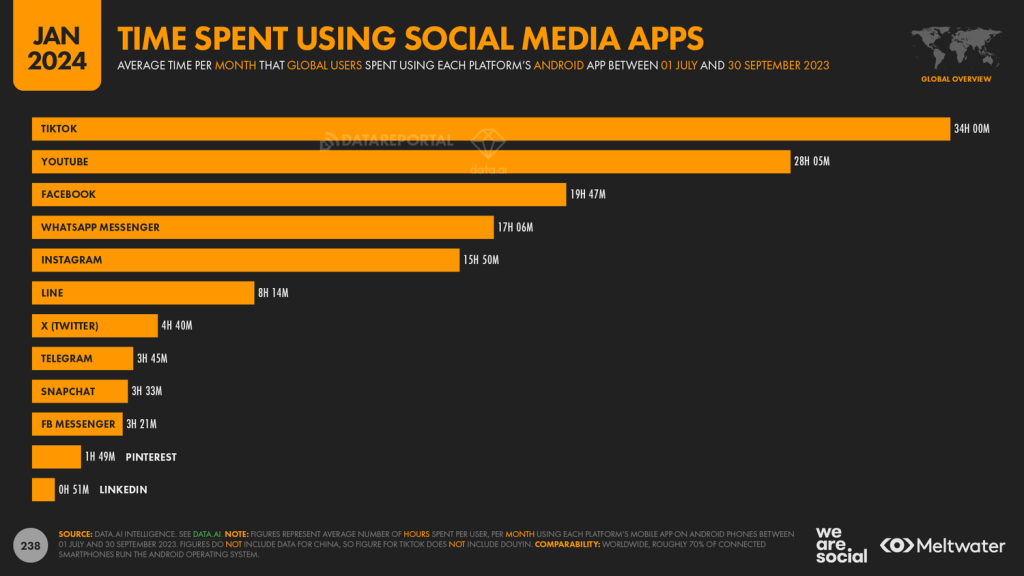
According to the Digital 2024 Global Overview Report, YouTube ranks second after TikTok in terms of user engagement, with people spending over 28 hours a month on the site.
With an astonishing 1 billion views daily and a staggering 1 billion visitors each month, it’s no surprise that users collectively watch around 6 billion hours of videos every month.
YouTube boasts over 2 billion active users, and each day, more than 1 billion hours of content are consumed.
This immense reach and influence make YouTube an invaluable resource for content creators and businesses alike, providing them with a unique opportunity to connect with audiences around the world.
Video content is a must-have in today’s digital marketing world. It grabs attention fast and gets your message across in a way that sticks.
With platforms like Instagram and TikTok growing in popularity, video content is easier to share and has the potential to go viral, giving your brand even more visibility.
YouTube Ads play a key role in this by boosting brand awareness and engagement through eye-catching video content.
They’re perfect for telling your brand’s story, working hand-in-hand with other marketing channels, and offering useful analytics to help fine-tune your campaigns.
Key Benefits of Using YouTube Ads Over Other Platforms
Here’s a more conversational version of that:
Did you know that 88% of marketers have seen a solid return on investment with YouTube ads? Compared to other platforms, YouTube offers some serious advantages:
- A huge audience, with over 2 billion monthly users in 2024.
- Higher engagement, thanks to the popularity of video content.
- Advanced targeting so you can reach exactly who you want.
- Cost-effective pricing models, like pay-per-click (PPC) and cost-per-thousand-impressions (CPM).
- Seamless integration with Google Ads.
- Detailed analytics to help you fine-tune your campaigns.
- The potential for your content to go viral, boosting your brand visibility.
- Mobile-friendly formats that cater to users on the go.
- Brand safety controls to ensure your ads appear in the right places.
With these benefits, YouTube ads are a game-changer for marketers wanting to effectively connect with their target audience.
Types of YouTube Advertising: Choose the Right Ad Format for Your Campaign
Getting to know the different types of YouTube ads and picking the right format is really important. Why?
It helps you boost engagement, reach your campaign goals, make the most of your budget, target the right audience, tell your brand’s story better, and track performance more effectively.
Here are the main types of YouTube ads:
- Skippable Video Ads
With these ads, viewers can skip after just 5 seconds. As an advertiser, you only get charged if someone watches for at least 30 seconds or interacts with the ad.
But here’s the catch: viewers might skip before they even get your message.
So, it’s crucial to make those first 5 seconds super engaging. If done right, these ads are great for reaching people who are into video content. - Non-Skippable Video Ads
This ad guarantees viewer impressions since it cannot be skipped. However, it can frustrate viewers if it is not engaging.
The limited duration of 15-20 seconds restricts the amount of content.
Advertisers need to keep the ad short, punchy, relevant and visually appealing. These ads are suitable for delivering a quick brand message or promoting a specific product or offer. - Bumper Ads
This type of ad offers a non-skippable format, with a 6-second duration. However, the limited duration may not be suitable for complex messages and require a creative approach.
These ads are effective for reaching viewers and are suitable for delivering a quick message or reinforcing existing brand awareness. - In-feed Video Ads
Previously known as YouTube Video Discovery Ads, these appear in YouTube search results. They help boost visibility when people are actively searching for related topics.
However, if the ad doesn’t match what viewers expect, they might see it as misleading, leading to lower click-through rates.
That’s why advertisers need to optimize their video content and ensure it provides value while aligning with what users are actually searching for. - Outstream Ads
This ad starts playing automatically when it comes into view, and since it plays on mute, it’s less annoying for viewers.
However, the muted playback can reduce the video’s impact. It’s only available on mobile devices and websites/apps within Google’s video partners.
To make the most of it, advertisers should focus on creating engaging videos that use captions or on-screen text and make sure they’re optimized for mobile viewing with a vertical or square aspect ratio. - Masthead Ads
This ad gets a prime spot at the top of YouTube’s homepage for 24 hours, and it autoplays with sound for up to 30 seconds. It’s great for big product launches, events, or boosting brand awareness.
However, it’s pricey since it’s charged by the day, and with just a 24-hour window, the long-term impact might be limited.
Plus, some viewers could find it intrusive.
To make the most of it, advertisers need to create a visually striking video that grabs attention in the first 10 seconds.
How to Launch Ad for the First Time on YouTube
1. Set Up YouTube Ads Account
First things first, you’ll need to set up your YouTube Ads account. Head over to the Google Ads website, sign in with your Google account, and you’re good to go.
Once you’re logged in, click on “Create a Campaign” and choose “Video” as your campaign type. Follow the prompts, link your YouTube channel, and you’ll unlock a whole new world of features!
2. Define Target Audience and Set Campaign Objectives
Now, it’s time to define your target audience. Think about who you want to reach – their age, interests, and behaviors. This will help you create ads that resonate with the right people.
Set clear goals for your campaign too, whether it’s boosting brand awareness, driving traffic to your website, or generating leads. Having a clear objective will keep you focused and on track.
3. Creating Compelling Video Content
But the real magic happens when you create compelling video content. Here are some tips:
- Use storytelling technique to connect with audience
- Focus on delivering information that solves problems or challenges
- Use high-quality visuals, sound and include interactive elements
- Aim for a duration of 15–30 seconds to maintain viewer interest.
- Hook viewers attention within the first few seconds.
- Include a “Call to Action” to encourage viewers to take the next step, whether it’s visiting your website or subscribing to your channel.
- Optimize video for different platforms like TikTok or Instagram reels
If you’re feeling a bit tech-savvy, tools like Adobe Premiere Pro or Final Cut Pro can help you create and edit your videos.
But if you’re more of a DIY kind of person, platforms like Canva, CapCut, and InShot are super user-friendly and can help you create awesome videos in no time.
So, there you have it! With your YouTube Ads account set up, your target audience defined, and your video content on point, let’s get those views, leads, and conversions rolling in!
4. Upload Your Ad and Set Up Targeting Parameters
Alright, now that your video is all set, it’s time to upload it to your YouTube channel. Just head over to your Google Ads account, select your campaign, and pick your ad format.
You’ve got options like skippable ads or bumper ads—choose what fits your strategy best. Don’t forget to set your targeting parameters based on the audience you defined earlier!
Think about their location, language, and interests to make sure your ad lands in front of the right eyes.
5. Overview of YouTube’s Creative Studio for Video Editing
Next up, let’s talk about YouTube’s Creative Studio. This is a fantastic tool for editing your videos! You can easily trim clips, add some catchy music, and throw in text overlays right there on the platform.
Plus, the studio gives you access to analytics so you can track how your video is performing. This feedback is gold for tweaking your future campaigns. Getting familiar with these tools can really boost the quality and impact of your ads.
Optimizing Your YouTube Ads for Maximum ROI

1. Importance of A/B Testing in YouTube Ads
A/B testing is super important for getting the most out of your YouTube ads. It lets you test different versions of your ads to see which one works best.
By switching up things like the ad copy, visuals, or calls to action, you can figure out what really connects with your audience.
It’s a smart, data-driven way to fine-tune your strategy and get better ROI.
To make your ads even more relevant and engaging, focus on:
- Targeting the right audience
- Creating compelling content
- Using eye-catching thumbnails
These simple strategies can help your ads resonate better with viewers.
2. How to Use YouTube Analytics to Track Performance
YouTube Analytics gives you valuable insights into how well your ads are doing. Some key metrics to watch are view rate, click-through rate (CTR), and conversion rate.
By looking at these, you can see which ads are working and which ones might need adjustments. Regularly checking your analytics helps you make smart decisions to fine-tune your campaigns for better results.
3. Best Practices for Adjusting Bids and Budgets Based on Performance
Adjusting your bids and budgets based on how your ads are doing is key to getting the most out of your ad spend. Here are a few best practices:
- Keep an eye on performance: Regularly check your metrics and boost bids on ads that are doing well to increase their visibility.
- Set daily budgets: Spread your budget wisely, making sure your best-performing ads get enough funding.
- Try automated bidding: Google’s automated bidding can help by adjusting bids in real time based on your campaign goals.
While using the right strategies is important, make sure you avoid these common mistakes:
- Ignoring audience feedback: Pay attention to comments and other feedback from your viewers.
- Not optimizing for mobile: Ensure your ads work well on mobile devices.
- Skipping A/B testing: Without testing, you’ll miss out on finding what really works for your audience.
YouTube Advertising Costs: What You Need to Know

Managing costs wisely helps you effectively allocate budget, optimize campaigns, maximize ROI and enhance ad effectiveness. You will also face less risk of wasting resources.
The cost of advertising on YouTube depends on these factors:
- Ad Type and Format: Different ad formats and lengths affect costs, with longer or prime-position ads typically being more expensive.
- Targeting Options: Ads aimed at specific audiences may cost more but can be more effective, while broader targeting might be cheaper but less engaging.
- Bidding Strategy: Advertisers bid for ad placements, with higher bids generally leading to better placements but higher costs. There are different pricing models, like cost-per-view (CPV) and cost-per-click (CPC).
- Ad Placement: Ads placed at the beginning or during videos (pre-roll or mid-roll) cost more than those in less prominent spots, like sidebar display ads.
- Video Quality and Production Costs: Higher-quality videos and production costs can lead to higher bids and overall advertising expenses.
1. Average Cost-Per-View (CPV) and Cost-Per-Click (CPC) on YouTube
On average, you can expect to pay between $0.10 and $0.30 per view for YouTube ads, and around $0.20 to $2.00 per click.
These costs can change depending on things like how good your ad is, your targeting choices, and how much competition there is.
Even though CPV might look low, it’s crucial to focus on targeting the right audience and creating engaging content to really make the most of your investment.
2. How to Calculate the ROI of Your YouTube Campaigns
To figure out the return on investment (ROI) for your YouTube campaigns, follow these steps:
- Calculate your net profit: Subtract your total ad spend from the revenue you made from the campaign:
Net profit = Revenue Generated from Campaign – Total Ad Spend - Work out the ROI: Use this formula: ROI = (Net Profit / Total Cost) × 100
For example, if you spent RM 4,000 on ads and made RM 20,000 in revenue, your ROI would be 400%. This metric helps you see how well your campaigns are performing and guide your decisions for future ads.
3. Comparison of YouTube Ad Costs with Other Platforms
When you compare ad costs across platforms, YouTube usually offers pretty competitive pricing. For example, Facebook Ads typically have a cost-per-click (CPC) between $0.50 and $2.00, while Google Ads can range from $1.00 to over $2.00, depending on the industry.
Although YouTube’s cost-per-view (CPV) might be lower, how effective each platform is can depend on who you’re targeting and what your campaign goals are.
So, it’s important to consider where your audience spends their time and how each platform fits with your marketing strategy.
4. Understanding YouTube CPM
CPM stands for “Cost Per Mille,” which translates to “Cost Per Thousand Impressions.” It shows how much advertisers pay for every 1,000 times their ad is displayed on YouTube. CPM is a handy way to gauge how cost-effective your campaigns are.
Average YouTube CPM Rates
YouTube’s CPM rates can vary a lot, but they generally range from $1 (about RM4.50) to $20 (around RM90.00). This variation depends on factors like the type of content, how you target your audience, the ad format, where your audience is located, and even the time of year.
Strategies for YouTube Ad Campaigns in 2024

Try Remarketing to Boost Conversions: Target users who’ve interacted with your brand before, either on YouTube or other platforms. Showing personalized ads to these familiar faces can really help increase conversion rates.
Use Custom Audiences for Better Targeting: Create specific audience segments based on things like interests, behaviors, or demographics. This helps you spend your ad budget more wisely and reach the viewers who are most likely to be interested.
Leverage Influencers to Amplify Your Ads: Partner with influencers who have a strong connection with their followers. This can lead to better results, like higher view and click-through rates.
Integrate YouTube Ads with Google Ads: Combining these platforms lets you use audience data and insights from both, making it easier to optimize your campaigns and measure performance more comprehensively.
Conclusions
Mastering YouTube Ads requires a combination of understanding the audience, utilizing various ad formats strategically, creating compelling content, setting a budget and bidding strategy, and analyzing performance metrics.
To succeed, start experimenting with small campaigns, testing different approaches, and continuously learning. Success in YouTube advertising is an ongoing journey. By learning and adapting your strategies, you can enhance your brand visibility.
KNKV Group — Redefining Creativity and Excellence.
Trusted Partner for Success
KNKV Group is dedicated to helping businesses of all sizes achieve their full potential through effective marketing and advertising campaigns, making them a trusted partner for clients looking to enhance their brand presence and achieve their business goals.
Reach out to Mr. Rifaiq at +60 12-777 2776. Your success story begins with KNKV Group!