TV Commercial Production Process: From Script to Broadcast
Creating a TV commercial involves far more than putting a camera in front of a product and pressing record. Behind every polished advertisement is a carefully planned TV commercial production process that brings together creative ideas, professional filming, precise editing, sound design, visual effects, and final broadcast preparation.
For businesses, the quality of a commercial can influence how customers perceive the brand. Therefore, every production decision matters, from the first concept and script to the final version delivered for broadcast.
While the process may seem complicated, working with an experienced production team can make each stage more organized and manageable. This is where KNKV can help businesses create professional TV commercials that communicate their message clearly and present their brand with confidence.
What Is the TV Commercial Production Process?
The TV commercial production process is the series of stages involved in turning a marketing idea into a finished advertisement ready for television or other video platforms.
Typically, the process includes:
- Creative planning and concept development
- Scriptwriting and storyboarding
- Pre-production planning
- Casting and location preparation
- Professional filming
- Video editing
- Sound design and music
- Color grading and visual enhancement
- Final quality checks
- Broadcast delivery
Each stage has a specific purpose. More importantly, the stages work together. A strong concept needs good execution, while professional filming needs equally strong editing and post-production to turn raw footage into a compelling commercial.
Why Is Pre-Production Important?
Before filming begins, the production team needs to establish exactly what the commercial should communicate. During pre-production, the team may discuss the campaign objective, target audience, creative direction, script, visual style, locations, actors, props, wardrobe, equipment, and shooting schedule. This preparation might happen behind the scenes, but it can make a significant difference to the final result.
For example, a commercial promoting a premium product may require a completely different visual approach from one promoting an everyday consumer service. Therefore, the production team needs to understand the brand before deciding how the commercial should look and feel.
At KNKV, businesses can work through the creative and production requirements before filming begins. This helps create a clear production direction and reduces unnecessary complications during the shoot.
How Does Scriptwriting Shape a TV Commercial?
The script provides the foundation for the commercial. A good script should communicate the key message without overwhelming the audience. Because TV commercials usually have limited running time, every line, scene, and visual needs to serve a purpose.
The script may include:
- Opening hook
- Product or service introduction
- Key benefits
- Brand message
- Call to action
- Voice-over
- Dialogue
- Visual instructions
However, writing for video is different from writing a standard advertisement. The message needs to work together with visuals, sound, pacing, and performance. That is why the script should be developed with production in mind. A strong idea on paper still needs to translate naturally onto the screen.
What Happens During Storyboarding?
Once the script is ready, the production team can plan how each scene will appear visually. A storyboard provides a visual guide for the commercial. It can show camera angles, scene composition, character movements, product placement, transitions, and other important details. As a result, the production crew has a clearer understanding of what needs to be captured during filming.
Storyboarding can also help identify potential problems before production begins. Instead of discovering during filming that an important shot is missing, the team can plan the required footage beforehand.
What Happens During the Filming Stage?
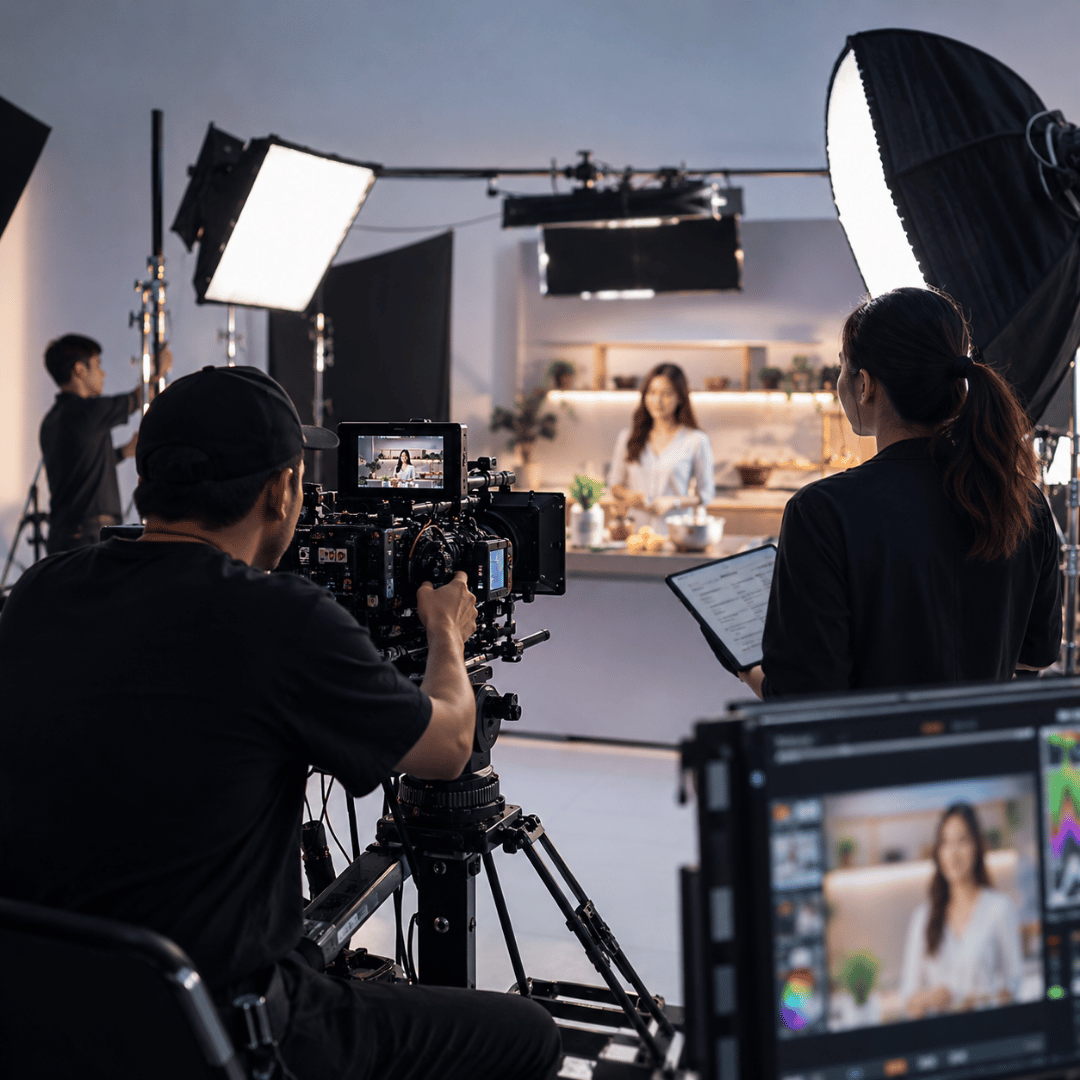
Filming is one of the most important stages of the TV commercial production process because this is where the creative concept becomes actual footage. However, professional filming involves much more than simply recording scenes.
The production team may need to manage:
- Camera positioning
- Lighting
- Composition
- Actors and presenters
- Product positioning
- Camera movement
- Background details
- Set design
- Sound recording
- Multiple takes
Lighting, in particular, can dramatically affect the appearance of a commercial. A professionally lit product can look more attractive and premium, while carefully controlled lighting can create the right atmosphere for a brand story.
Similarly, camera angles and movements can influence how viewers experience a scene. For instance, close-up shots may highlight product details, while wider shots can establish the environment and communicate scale.
At KNKV, professional filming can help businesses capture footage that is visually aligned with their brand identity and campaign objectives. The goal is not simply to record enough footage, but to capture the right footage for the editing process that follows.
Why Is Professional Camera Work Important?
A commercial often has only a few seconds to capture attention. Therefore, visual quality matters. Professional camera work can help create a more polished viewing experience through appropriate framing, lighting, movement, focus, and composition. More importantly, the filming team needs to think about the final edit while shooting.
Different angles, close-ups, wide shots, reaction shots, product details, and supporting footage can give editors more flexibility later. Consequently, good filming and good editing are closely connected.
What Happens After Filming?
Once filming is complete, the production moves into post-production. This is where the raw footage begins to take shape as a finished commercial.
Post-production can include:
- Video editing
- Sound editing
- Music selection
- Voice-over
- Color correction
- Color grading
- Motion graphics
- Visual effects
- Logo and brand integration
- Final mastering
Although the cameras have stopped rolling, there is still significant creative work involved.
How Does Video Editing Transform Raw Footage?
Video editing is where the production team selects the strongest footage and arranges it into a coherent story. Editors may review hours of footage to find the shots that best support the commercial’s message. They then determine the sequence, timing, pacing, transitions, and overall flow. This stage is particularly important because even beautifully filmed footage can feel ineffective if it is edited without a clear structure.
A professional editor considers questions such as:
- Does the opening capture attention?
- Is the message easy to understand?
- Does each scene move the story forward?
- Is the pacing appropriate?
- Does the product receive enough attention?
- Is the call to action clear?
- Does the ending leave a strong impression?
Therefore, editing is not simply about cutting footage. It is about shaping the viewer’s experience.
Why Does Sound Matter in TV Commercial Production?
Visuals may capture attention, but sound can significantly influence how the commercial feels. Depending on the campaign, post-production may include dialogue editing, voice-over recording, background music, sound effects, and audio mixing.
For example, an energetic commercial may benefit from fast-paced music and dynamic sound effects, while a premium brand may require a more refined and restrained audio approach. Most importantly, the sound should support the visuals rather than compete with them. At KNKV, businesses can bring together visual production and post-production elements to create a commercial that feels cohesive from beginning to end.
What Is Color Correction and Color Grading?
After editing, color correction and color grading can further enhance the visual presentation.
Color correction focuses on ensuring footage looks balanced and consistent. This may involve adjusting exposure, white balance, contrast, and other visual elements.
Color grading, meanwhile, is more creative. It can help establish a particular mood or visual identity.
For example, warmer tones may create a welcoming feeling, while a cooler visual style may communicate a modern or sophisticated atmosphere. As a result, color work can play an important role in making different scenes feel like part of the same commercial.
How Are Graphics and Visual Effects Added?
Some commercials require additional visual elements after filming.
These may include:
- Animated logos
- Product graphics
- Text animations
- Motion graphics
- Visual effects
- Screen replacements
- Compositing
- Brand elements
These elements can make information easier to understand while also reinforcing brand identity. However, they should be used purposefully. Too many effects can distract from the central message. Instead, professional post-production should make the commercial more engaging without taking attention away from the product or service.
What Happens During the Final Review?
Before a commercial is delivered, the production team needs to review the final version carefully. This can involve checking the picture quality, audio levels, graphics, color consistency, spelling, branding, timing, and overall message. The client may also provide feedback before the final version is approved.
This review stage is important because small details can affect how professional the commercial appears. A misplaced graphic, inconsistent color, audio issue, or incorrect brand information can reduce the quality of the final product. Therefore, careful quality control should never be treated as an afterthought.
How Is a TV Commercial Prepared for Broadcast?
Once the commercial has been approved, the final video needs to be prepared according to the requirements of the intended broadcaster or platform. Depending on where the advertisement will appear, technical specifications may include video format, resolution, audio requirements, duration, aspect ratio, and other delivery standards. The production team should ensure that the final commercial meets the relevant technical requirements before delivery. This final step brings the entire production process together, transforming a creative concept into a finished commercial ready to reach its intended audience.
How Can KNKV Help With TV Commercial Production?
Producing a professional TV commercial requires coordination across multiple creative and technical stages. For businesses, managing everything internally can become time-consuming, especially when filming, editing, sound, color, graphics, and final delivery all need to work together.
KNKV can support businesses throughout the production journey, from developing the creative direction to producing and refining the final commercial. Rather than treating filming and post-production as separate tasks, KNKV can help businesses build a more connected production workflow.
This can include:
Professional Filming
KNKV can help businesses turn their creative concepts into high-quality visual content through planned and professional production. From camera angles and lighting to composition and product presentation, each shot can be planned around the commercial’s intended message.
Video Editing
Once filming is completed, the raw footage needs to be shaped into a commercial that keeps viewers engaged. KNKV can help select, organize, and edit footage while maintaining the intended pacing, message, and brand identity.
Post-Production
Post-production can bring the final layer of polish to a commercial. Through color work, sound, graphics, visual effects, and other finishing elements, KNKV can help businesses create a more complete and professional viewing experience.
End-to-End Production Support
Most importantly, businesses do not have to think about each production stage in isolation. By coordinating the different elements of commercial production, KNKV can help create a smoother journey from concept to final video. The result is a TV commercial designed not only to look professional, but also to communicate the brand message effectively.
How Much Does TV Commercial Production Cost?
The cost of a TV commercial varies depending on the production requirements.
Factors that can influence the budget include:
- Commercial duration
- Number of filming days
- Number of locations
- Cast and crew requirements
- Equipment
- Set design
- Special effects
- Animation
- Voice-over
- Music
- Editing complexity
- Post-production requirements
A simple commercial may require fewer production resources, while a large-scale campaign could involve multiple locations, professional actors, complex sets, advanced visual effects, and extensive post-production.
Therefore, businesses should define the commercial’s objectives and production requirements before determining the appropriate budget.
How Long Does TV Commercial Production Take?
There is no single timeline for every commercial. A straightforward production may move relatively quickly, while larger campaigns can take considerably longer because of planning, casting, location preparation, filming, editing, revisions, and technical delivery requirements.
Generally, the timeline can be divided into three broad stages:
- Pre-production: Planning, scripting, storyboarding, casting, locations, scheduling, and preparation.
- Production: Filming the scenes, product shots, interviews, voice recordings, and other required footage.
- Post-production: Editing, sound design, color grading, graphics, visual effects, revisions, and final delivery.
Planning early can make the entire process more efficient and reduce avoidable delays.
What Makes a TV Commercial Effective?
A professional-looking commercial is important, but visual quality alone does not guarantee effectiveness.
A strong commercial should also have:
- A clear message
- A compelling opening
- Relevant visuals
- Consistent branding
- Appropriate pacing
- Strong sound design
- A memorable concept
- A clear call to action
Furthermore, the commercial should be created with its audience in mind. A production can be technically impressive yet fail to connect with viewers if the message does not address their needs or interests. That is why strategy, creativity, filming, editing, and post-production need to work together.
FAQ: TV Commercial Production Process
1. What is the first step in producing a TV commercial?
The process usually starts with understanding the campaign objective, target audience, key message, and creative direction. From there, the script and production plan can be developed.
2. How long does a TV commercial usually take to produce?
The timeline depends on the complexity of the project. Pre-production, filming, editing, post-production, revisions, and final delivery all contribute to the overall schedule.
3. Why is professional filming important?
Professional filming helps ensure that the commercial has strong visuals, suitable lighting, effective composition, and footage that can be edited into a polished final product.
4. What does post-production include?
Post-production may include video editing, sound design, color correction, color grading, motion graphics, visual effects, voice-over, and final mastering.
5. Can KNKV handle both filming and editing?
Yes. KNKV can support businesses with professional commercial production, including filming, editing, and post-production, helping create a more consistent final result.
6. Does a TV commercial need professional editing?
Professional editing can make a major difference. It helps control pacing, storytelling, transitions, sound, visual flow, and the overall viewing experience.
7. Can a TV commercial be used on digital platforms too?
Yes. Depending on the campaign requirements, commercial footage can potentially be adapted for digital advertising, websites, social media, and other video platforms.
8. Why should businesses work with a production company?
A professional production company can coordinate creative planning, filming, editing, and post-production while helping businesses avoid common production challenges and maintain a consistent quality standard.
From Script to Screen, Every Detail Matters
A successful TV commercial does not happen by accident. It is the result of multiple carefully connected stages, from the initial script and pre-production planning to filming, editing, sound design, color grading, and final broadcast preparation. Most importantly, every stage contributes to how the audience experiences the brand.
For businesses looking to produce professional TV commercials, having the right production partner can make the process considerably smoother. KNKV can support businesses with the creative and production expertise needed to bring an idea from script to screen, with particular attention to professional filming, precise editing, and polished post-production.
Ultimately, the goal is simple: create a commercial that looks professional, communicates clearly, and gives the brand a stronger presence in front of its audience.