
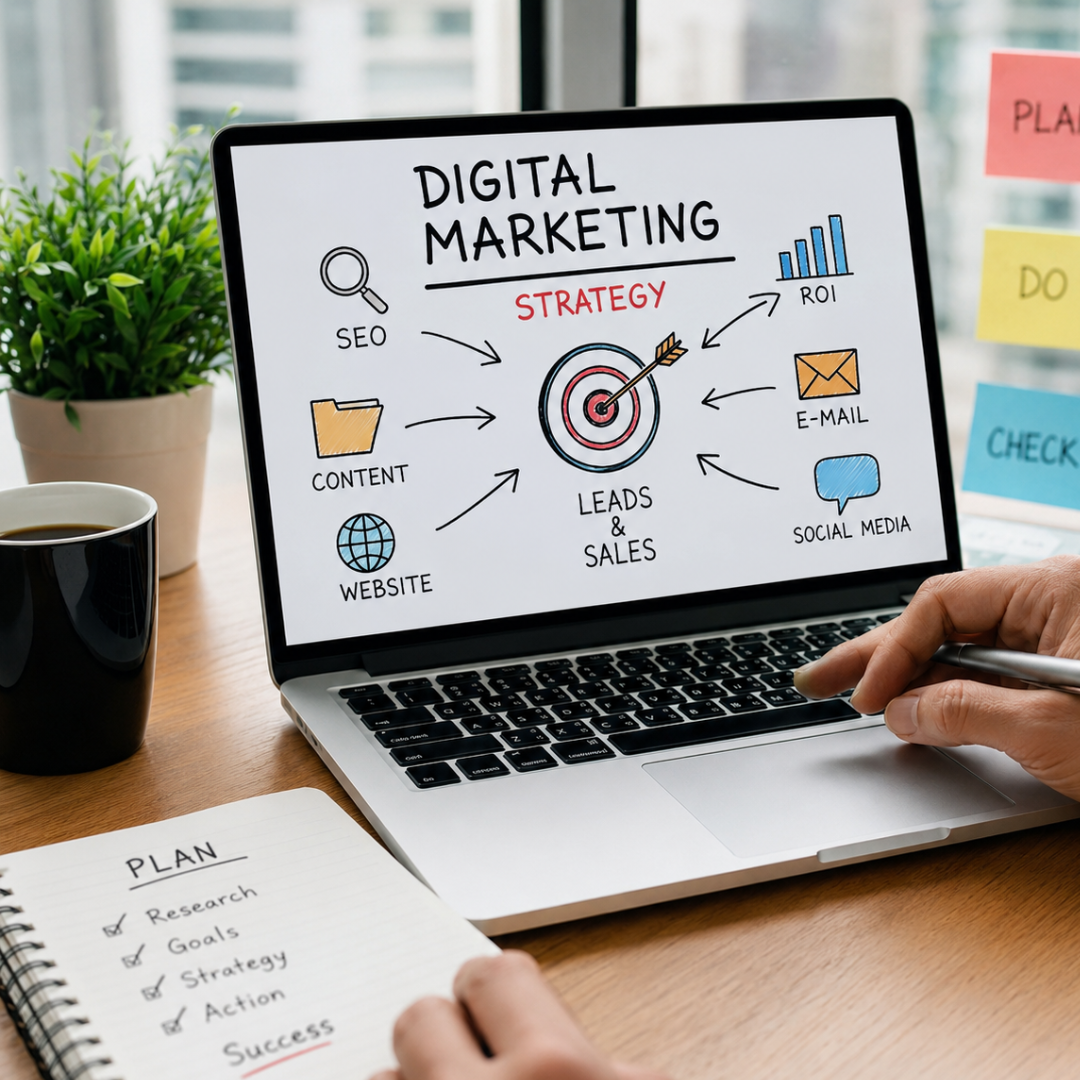
How to Create a Digital Marketing Strategy That Actually Generates Leads and Sales
Many businesses invest heavily in digital marketing, yet surprisingly few achieve the results they expect. They publish content regularly, run advertisements, post on social media, and even collaborate with influencers. Despite all that effort, the leads remain inconsistent and sales fail to grow as planned.
The reason is simple: marketing activities alone do not create results. What drives sustainable growth is having a clear and effective Digital Marketing Strategy that aligns every marketing effort with specific business goals.
A successful Digital Marketing Strategy is more than just posting online content or launching paid advertisements. It is a carefully planned system designed to attract the right audience, build trust, generate qualified leads, and ultimately convert those leads into paying customers.
In this article, we will explore how to create a Digital Marketing Strategy that not only increases visibility but also delivers measurable leads and sales.
Start With Clear Business Goals
Before choosing marketing channels or creating content, you must first define what success looks like for your business.
Many companies make the mistake of focusing on vanity metrics such as likes, followers, or impressions. While these metrics can indicate brand awareness, they do not necessarily contribute to revenue.
Instead, establish goals that directly support business growth. For example:
- Increase monthly sales by 20%
- Generate 100 qualified leads per month
- Improve website conversion rates
- Grow email subscribers
- Increase repeat customer purchases
Having clear objectives allows you to create marketing campaigns that are purposeful rather than random.
Every strategy should answer one critical question:
How will this activity help generate leads or sales?
If you cannot answer that question, the activity may not be worth your time or budget.
Understand Your Target Audience Deeply
One of the biggest reasons marketing campaigns fail is that businesses try to market to everyone.
The reality is that successful marketing speaks directly to a specific group of people. The better you understand your audience, the easier it becomes to create messages that resonate with them.
Go beyond basic demographic information such as age and gender. Learn about:
- Their challenges and frustrations
- Their goals and aspirations
- Their buying habits
- Their preferred platforms
- The questions they frequently ask
- The factors that influence purchasing decisions
For example, a business owner looking for marketing services may be less interested in technical jargon and more concerned about increasing sales and maximizing return on investment.
When you understand what matters most to your audience, your marketing becomes more relevant, persuasive, and effective.
Conduct Competitor Research
You do not need to reinvent the wheel.
Studying your competitors can reveal valuable insights into what works within your industry and where opportunities exist.
Analyze competitors by looking at:
- Their website structure
- Content marketing efforts
- Social media presence
- Advertising campaigns
- Customer engagement strategies
- Lead generation methods
Pay attention to customer comments and reviews as well. These often reveal common complaints and unmet needs that your business can address.
The goal is not to copy competitors but to identify gaps that allow your brand to stand out.
A strong Digital Marketing Strategy focuses on differentiation rather than imitation.
Build a High-Converting Website
Your website is often the first impression potential customers have of your business.
Even the best marketing campaign will struggle to generate sales if visitors arrive at a slow, confusing, or outdated website.
A high-converting website should include:
Clear Value Proposition
Visitors should immediately understand who you are, what you offer, and why they should choose you.
Mobile-Friendly Design
Most online traffic now comes from mobile devices. A responsive website ensures a smooth experience across all screen sizes.
Fast Loading Speed
Users expect websites to load quickly. Delays often result in higher bounce rates and lost opportunities.
Strong Calls-to-Action
Guide visitors toward specific actions such as:
- Contacting your business
- Requesting a quote
- Booking a consultation
- Downloading a resource
- Making a purchase
Trust Signals
Include customer testimonials, reviews, certifications, awards, and case studies to build credibility.
Remember, generating traffic is only half the battle. Converting visitors into customers is where real business growth happens.
Develop an SEO Strategy for Long-Term Growth
Search Engine Optimization (SEO) remains one of the most cost-effective ways to generate qualified leads.
Unlike paid advertising, SEO continues delivering results long after content is published.
To strengthen your SEO efforts:
Target Relevant Keywords
Focus on keywords your ideal customers are actively searching for.
Examples include:
- Digital Marketing Strategy
- Lead generation services
- Social media marketing
- SEO services
- Online advertising solutions
Create Valuable Content
Search engines reward content that genuinely helps users solve problems.
Create:
- Blog articles
- Guides
- Tutorials
- Industry insights
- Case studies
Optimize On-Page SEO
Ensure proper use of:
- Headlines
- Meta descriptions
- Internal links
- Image optimization
- Keyword placement
Build Authority
Quality backlinks from reputable websites help improve search rankings and increase credibility.
SEO is not a quick fix, but it is one of the most sustainable ways to generate consistent leads over time.
Use Content Marketing to Build Trust
People rarely purchase from brands they do not trust. Content marketing bridges that gap by providing useful information before asking for a sale. Instead of constantly promoting products, focus on helping your audience solve problems.
Effective content types include:
1.Educational Blog Posts
Answer common customer questions and provide actionable solutions.
2. Videos
Video content continues to dominate digital platforms because it is engaging and easy to consume.
3. Case Studies
Show real examples of how your products or services have helped customers achieve results.
4.Downloadable Resources
Offer e-books, checklists, templates, or guides in exchange for contact information. This approach helps generate leads while positioning your business as an industry expert.
Leverage Social Media Strategically
Many businesses spend countless hours posting on social media without a clear purpose. Social media should support your overall Digital Marketing Strategy rather than operate independently. Choose platforms based on where your audience spends time.
For example:
- LinkedIn for B2B businesses
- Facebook for community engagement
- Instagram for visual storytelling
- TikTok for short-form content and younger audiences
Focus on creating content that:
- Educates
- Entertains
- Inspires
- Builds trust
Consistency matters more than frequency.
A strategic posting schedule combined with meaningful engagement often delivers better results than posting multiple times a day without direction.
Implement Lead Generation Funnels
Not every visitor is ready to buy immediately.
That is why businesses need lead generation funnels that nurture prospects through different stages of the buying journey.
A typical funnel includes:
Awareness Stage
Potential customers discover your business through content, SEO, social media, or advertisements.
Consideration Stage
Prospects evaluate solutions and compare options.
Decision Stage
Customers are ready to take action and make a purchase.
Offer incentives such as:
- Free consultations
- Product demonstrations
- Downloadable resources
- Exclusive discounts
These incentives encourage prospects to share their contact information, allowing your business to continue nurturing the relationship.
Invest in Paid Advertising Wisely
Paid advertising can generate immediate traffic and leads when executed correctly.However, simply increasing advertising spend does not guarantee success.
Successful campaigns require:
1. Precise Targeting
Focus on reaching audiences most likely to convert.
2. Compelling Creative Assets
Use strong visuals and persuasive messaging.
3. Optimized Landing Pages
Ensure visitors arrive on pages specifically designed to convert.
4.Continuous Testing
Experiment with:
- Headlines
- Images
- Audiences
- Calls-to-action
- Ad formats
Small improvements in conversion rates can significantly impact overall profitability.
The most effective advertisers constantly analyze and refine their campaigns rather than relying on assumptions.
Use Email Marketing to Nurture Leads
Email marketing remains one of the highest-return digital marketing channels available. Unlike social media platforms, your email list is an asset you own and control.
Use email marketing to:
- Welcome new subscribers
- Share valuable content
- Promote offers
- Re-engage inactive customers
- Build long-term relationships
Personalized emails often outperform generic messages because they feel more relevant to the recipient.
Focus on delivering value consistently rather than only sending promotional messages. When done correctly, email marketing helps turn prospects into loyal customers.
Track the Metrics That Matter
You cannot improve what you do not measure. Many businesses focus on metrics that look impressive but provide little insight into actual performance. Instead, track indicators that directly impact business growth.
Important metrics include:
- Lead generation rate
- Cost per lead
- Conversion rate
- Customer acquisition cost
- Return on advertising spend
- Website traffic quality
- Email open and click-through rates
Regular analysis helps identify what is working and where improvements are needed. Data-driven decisions almost always outperform guesswork.
Continuously Optimize Your Strategy
Digital marketing is constantly evolving. Consumer behavior changes. Algorithms change. Market conditions change. A strategy that works today may become less effective tomorrow. Successful businesses continuously evaluate and improve their marketing efforts by:
- Reviewing campaign performance
- Testing new approaches
- Updating content
- Improving customer experiences
- Adapting to market trends
The most profitable companies view marketing as an ongoing process rather than a one-time project. Continuous improvement is often the difference between stagnant growth and long-term success.
Creating a Digital Marketing Strategy that actually generates leads and sales requires more than publishing content or running advertisements. It demands a structured approach built on clear goals, audience understanding, valuable content, effective lead generation systems, and continuous optimization.
Businesses that succeed online are not necessarily the ones with the biggest budgets. They are often the ones with the clearest strategy and the strongest commitment to understanding their customers.
By focusing on the right audience, delivering genuine value, tracking meaningful metrics, and refining your approach over time, your Digital Marketing Strategy can become a powerful engine for sustainable growth, consistent leads, and increased sales.
The digital landscape will continue to evolve, but one principle remains constant: businesses that prioritize strategy over tactics will always have a stronger foundation for long-term success. Visit our website t0 get more information.